Prince Kung’s Palace Museum 恭王府博物馆
A palace museum in the heart of a hutong. Be ready for the crowds and the history. Don’t miss the ginkgo trees, especially in season (October/November). Explore the surrounding hutongs and have a real Beijing lunch.
这座王府博物馆藏在胡同深处。做好迎接人潮与历史的准备。别错过银杏树,尤其是在银杏季(10月至11月)。逛逛周边胡同,再来一顿地道的北京午餐。
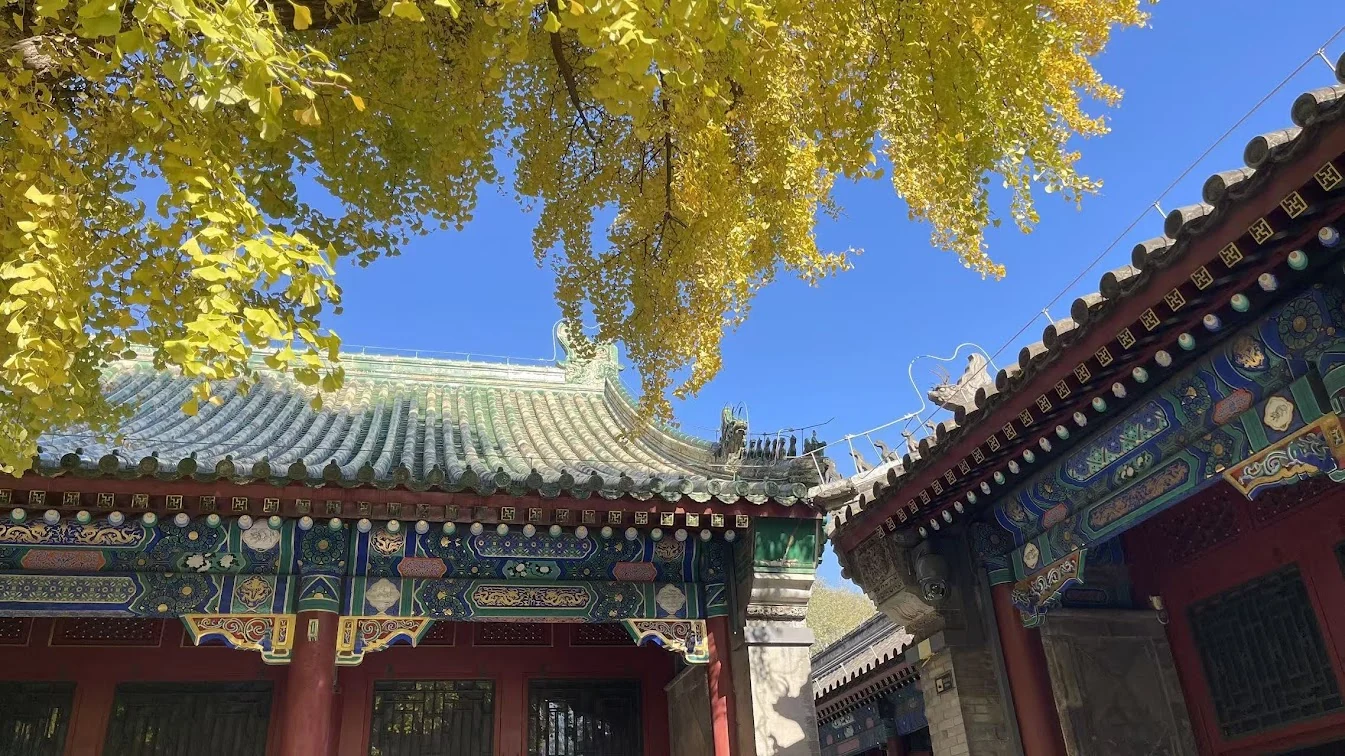 银杏树
More visit facts更多参观信息
- Opening hours · 开放时间
- 8:30 a.m.–5:00 p.m.; last entry 4:10 p.m.; Closed: Mondays, except public holidays.
上午8:30至下午5:00,下午4:10停止入场;周一闭馆,法定节假日除外。 - Visit length · 参观时长
- Allow 2–3 hours to explore the palace complex and gardens.
建议安排2至3小时游览王府建筑群和花园。 - Admission · 门票
- ¥40 per person, ¥20 for seniors.
成人票每人40元,老年人票20元。 - Booking · 预约
- Reserve through the official website or WeChat account from 8:00 p.m. up to ten days before your visit. Same-day tickets may be available for purchase on site by scanning a QR code; confirm availability before relying on this.
可通过官方网站或微信公众号预约,最早可在参观前10天的晚8点预订。现场扫码可能买到当日票,出发前请确认余票。 - English support · 英文支持
- English audio guide available for ¥30. English in garden exhibits and some of the newer exhibits. Some of the main exhibits have no English signage.
提供30元的英文语音导览。花园展览和一些较新的展览设有英文说明;部分主要展览没有英文标识。 - Published · 发布日期
- 13 Nov 2026 · 2026年11月13日
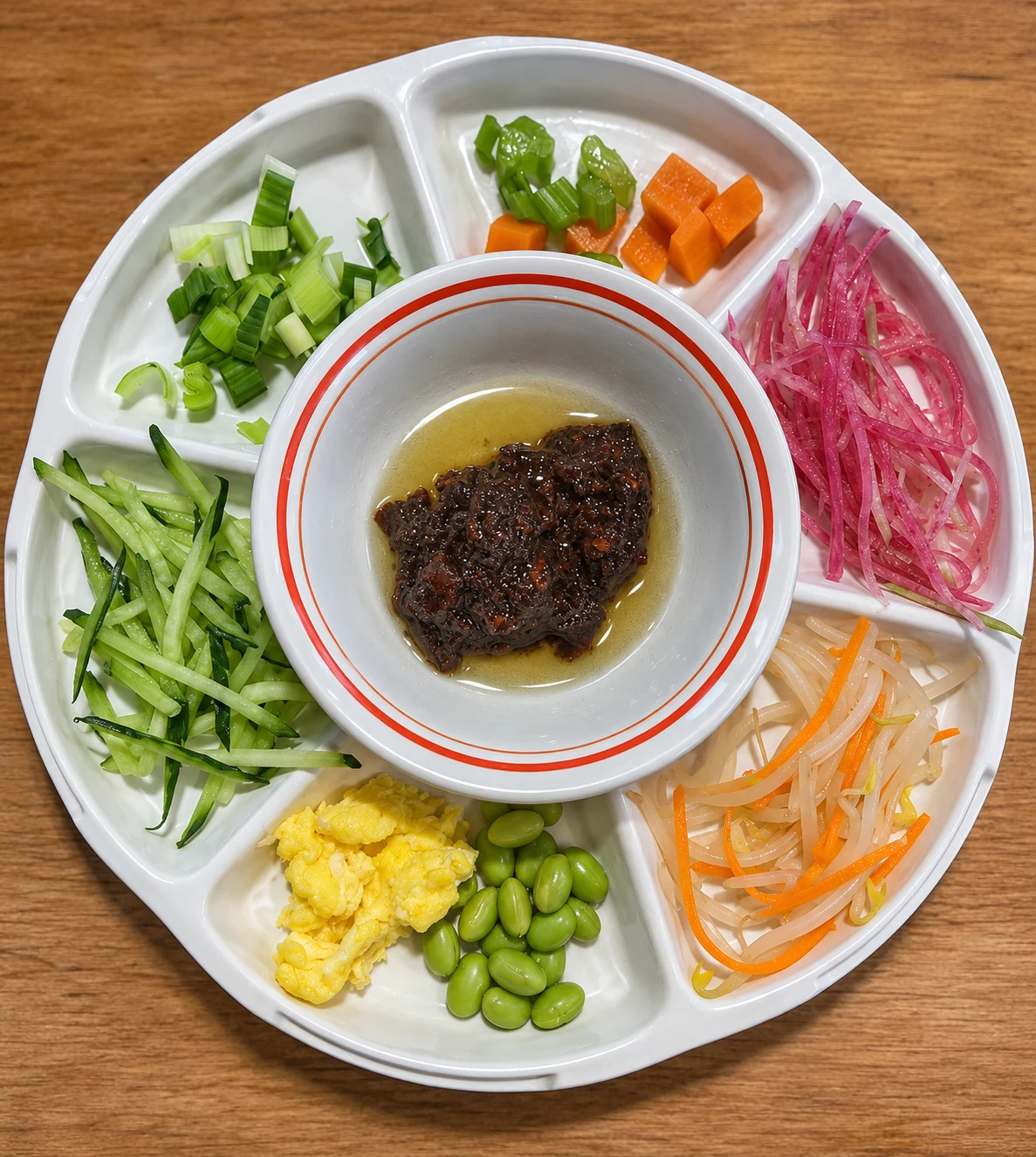
A few weeks ago my brother was visiting Beijing and we did a hutong walk searching for the noodle shop made famous when Nvidia CEO Jensen Huang broke away from diplomatic meetings for a quick bite. We found that shop along with a 30 minute line so we headed to another branch and had a fantastic bowl of zhajiangmian. We then walked in the direction of Qianhai and I saw signs for Prince Kung’s Palace Museum. I made a mental note to visit it, thinking I had never been inside before.
几周前,我哥哥来北京玩,我们在胡同里找一家因为英伟达首席执行官黄仁勋(Jensen Huang)而出名的面馆:据说他曾从外交会谈中抽身,匆匆吃了一顿。我们找到了那家店,却发现要排半小时队,于是去了同一家店的另一家分店,吃了一碗很棒的炸酱面。之后我们往前海方向走,我看到了恭王府博物馆的指示牌。我记下了它,心想自己以前从没进去过。
When the day to visit came, my wife and I took the subway, getting off at Beihai Bei station. Apple Maps suggested a nine minute walk to get to the museum. Hawkers shouted out in Chinese and English “rickshaw” which would probably be a nice option if I had never been on one and if I wasn’t averse to being pitched touristy things. Or pitched things in general. It was a touristy walk, yes, but the small streets, shops, and architecture also reminded me of what makes Beijing such a treasure. Its timelessness.
到了参观那天,我和妻子坐地铁到北海北站。苹果地图显示,从那里步行到博物馆要九分钟。一路上有人用中英文吆喝“人力车”,如果我以前没坐过、也不介意被推销旅游项目的话,这大概会是个不错的选择。或者说,我就是不喜欢被推销任何东西。沿途确实很游客化,但那些小街、商铺和建筑也让我再次想起北京的迷人之处:它仿佛历久弥新。
It was crowded as we approached the entrance and I realized this was going to be a new museum experience for us - the tourist museum. A QR code scan and two tickets later (40 RMB a ticket, 20 RMB for seniors) and we were ready to enter. I did a quick check of FourSquare and found I had checked in at the palace in 2011. My wife said we also went there together later in the 2010s. Hmmm, had I been here?
接近入口时,周围变得很拥挤,我意识到这将是一次全新的博物馆体验——“游客型博物馆”。扫了二维码、买了两张票(每张40元,老年人20元)后,我们就准备入场了。我赶紧看了一下 Foursquare,发现自己2011年就在这里签到过。妻子说,我们后来在2010年代也一起来过。嗯,我真的来过吗?
Once we entered, I saw the sign for audio guides. 30 RMB for an hour tour. Given how much I didn’t know about this museum, I was tempted to try it but ultimately decided against it. My wife had the advantage to skim the tourist groups and listen to the tour guide. We mostly just edged our way past the groups.
入场后,我看到了语音导览的告示:每小时30元。想到自己对这座博物馆了解不多,我本来很想租一个,但最终还是作罢。妻子比较擅长从旅行团之间穿过去听导游讲解。实际上,我们大多只能挤着从人群旁边穿过。
Upon entrance to the first hall of the compound, I turned left and saw my doppelganger who turned out to be Qing Taizong who was a Manchu ruler based in Shenyang. Next to him was a photo of the palace in Shenyang which I visited many years ago.
走进院落的第一座展厅,我向左一看,发现自己和一幅画像长得很像。那人原来是清太宗,一位以沈阳为据点的满族统治者。他旁边还挂着沈阳故宫的照片,那是我多年前去过的地方。
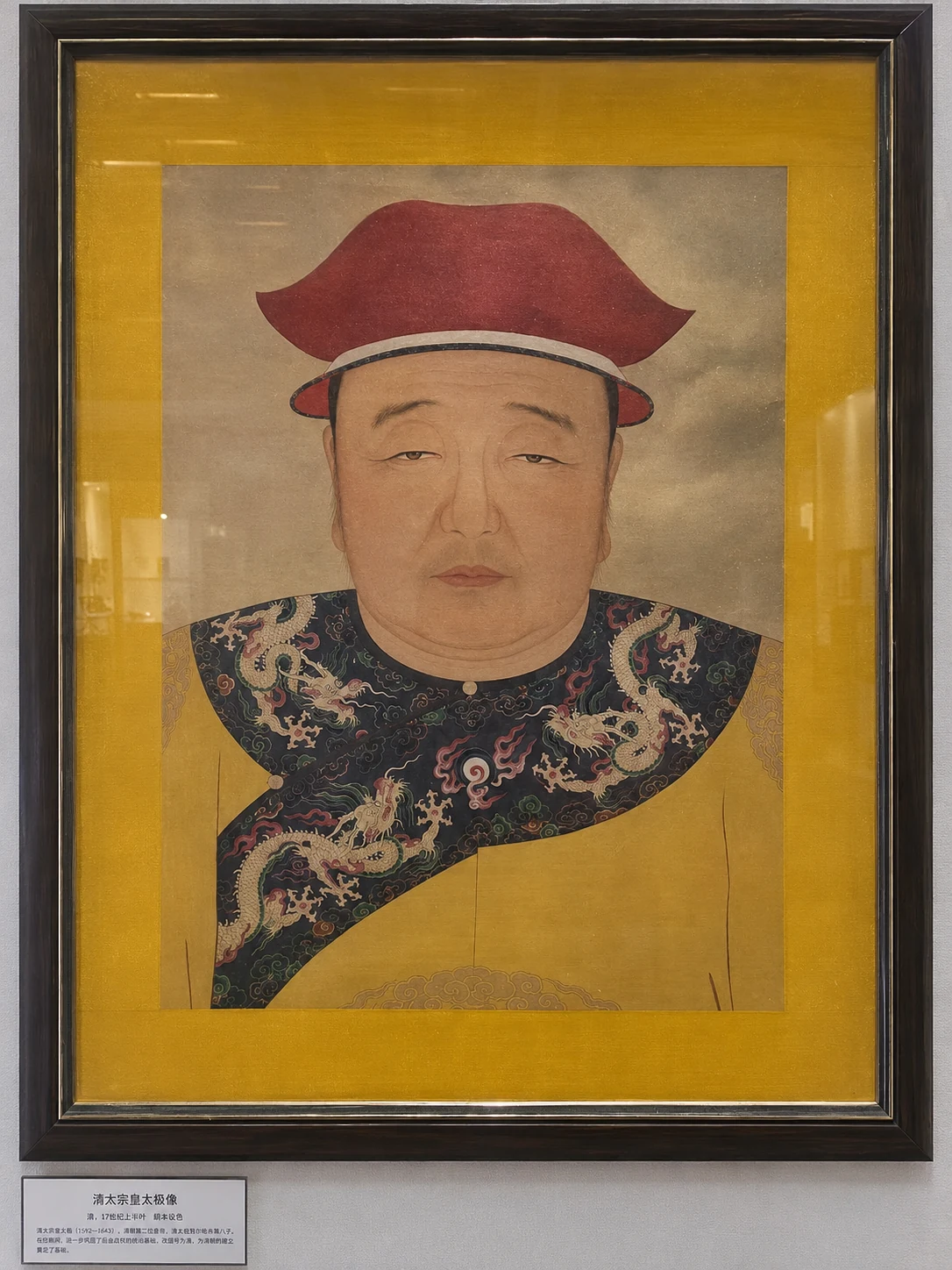
While a portion of the first hall provided historical Qing era context (including Qing Taizong and the Shenyang palace), I found most of the hall covered the evolution of the palace and its occupants. I found myself more drawn to the photo displays. They were more tangible to me than the drawn portraits. Unfortunately, this hall was almost devoid of any English signage, the audio guide could have been useful.
第一座展厅有一部分介绍清代历史背景(包括清太宗和沈阳的宫殿),但我觉得大部分内容讲的是王府的演变及其主人。我更容易被照片展品吸引。相比绘制的肖像,照片对我来说更真实、更有触感。遗憾的是,这个展厅几乎没有英文标识,语音导览本来可能会派上用场。
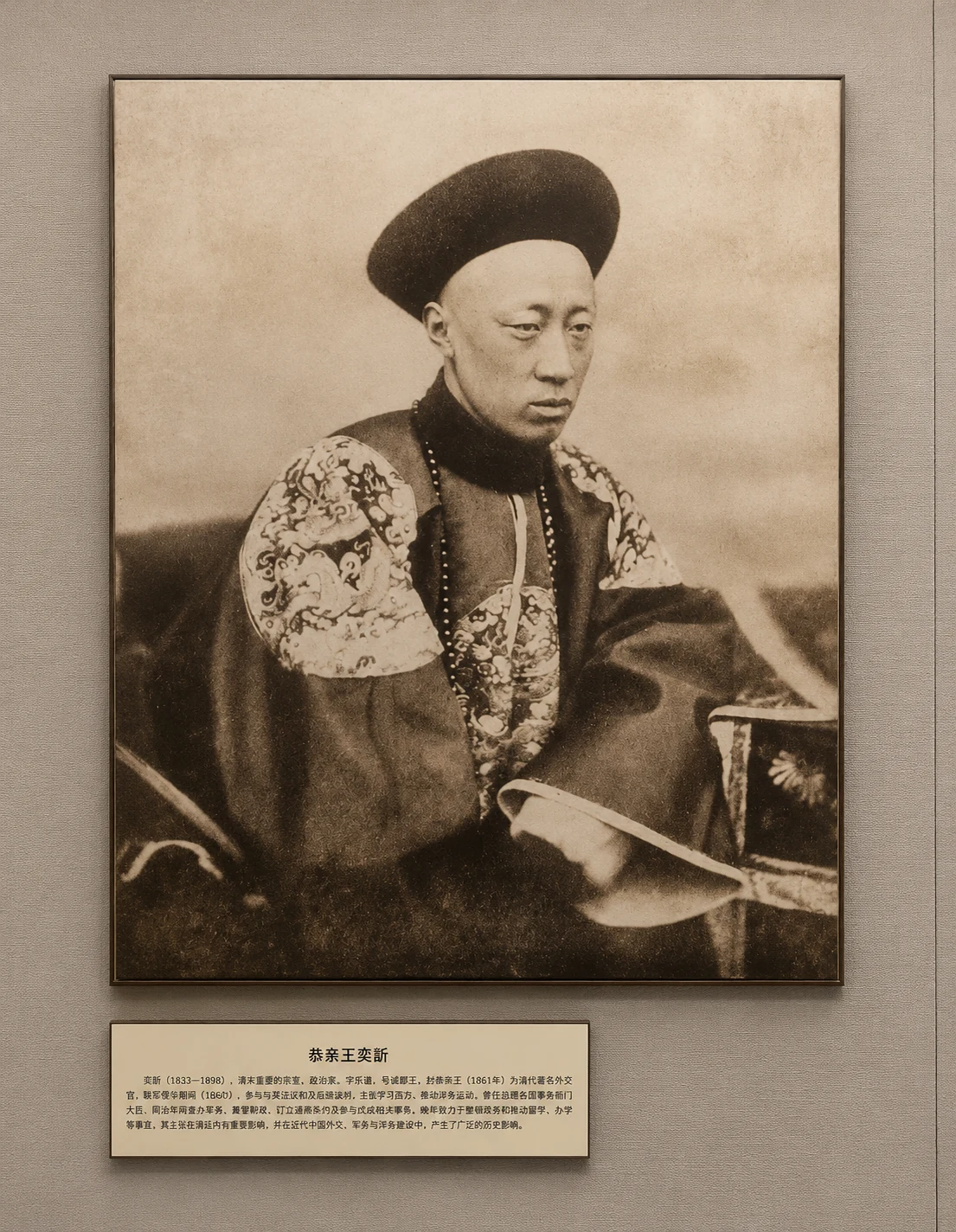
Prince Gong (1833–1898)
恭亲王(1833—1898年)
There were also photos showing Qing relations with that west that captured my imagination for the time they lived in.
还有一些照片展示了清朝与西方的往来,那个时代的故事让我很着迷。
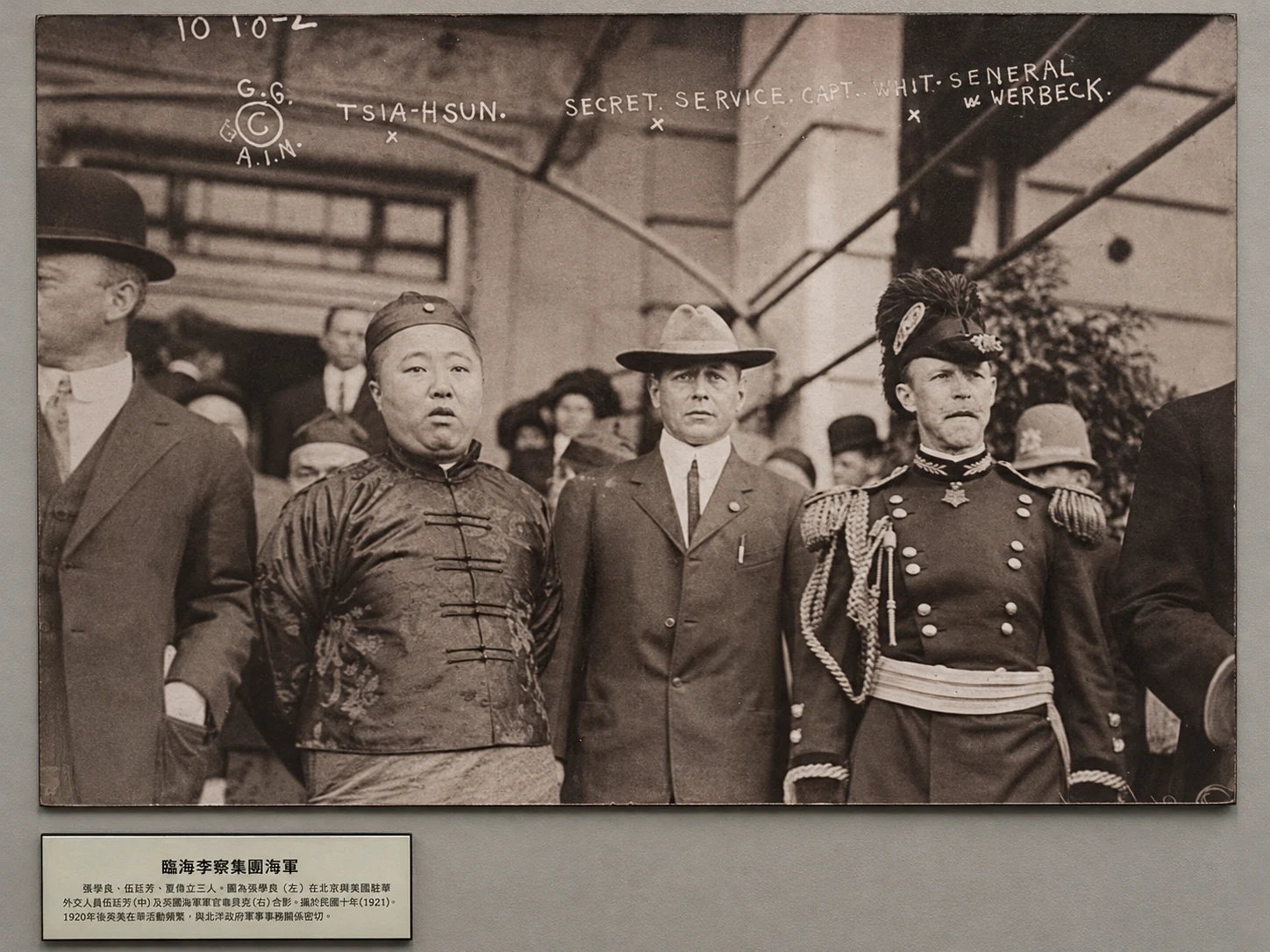
A Qing prince, a US secret service agent, and a US naval officer (1910).
一位清朝王爷、一名美国特勤局特工和一名美国海军军官(1910年)。
Passing the first hall and into the next courtyard, what really stood out was the ginkgo trees and the people taking photos of the trees. Without people taking photos of the trees, I probably would not have lingered on them. I was grateful for the interruption.
穿过第一座展厅进入下一个院落时,最吸引我注意的是银杏树,以及围着树拍照的人。如果没有那些拍照的人,我大概不会在树旁停留那么久。感谢他们让我留意到了这些树。
银杏树
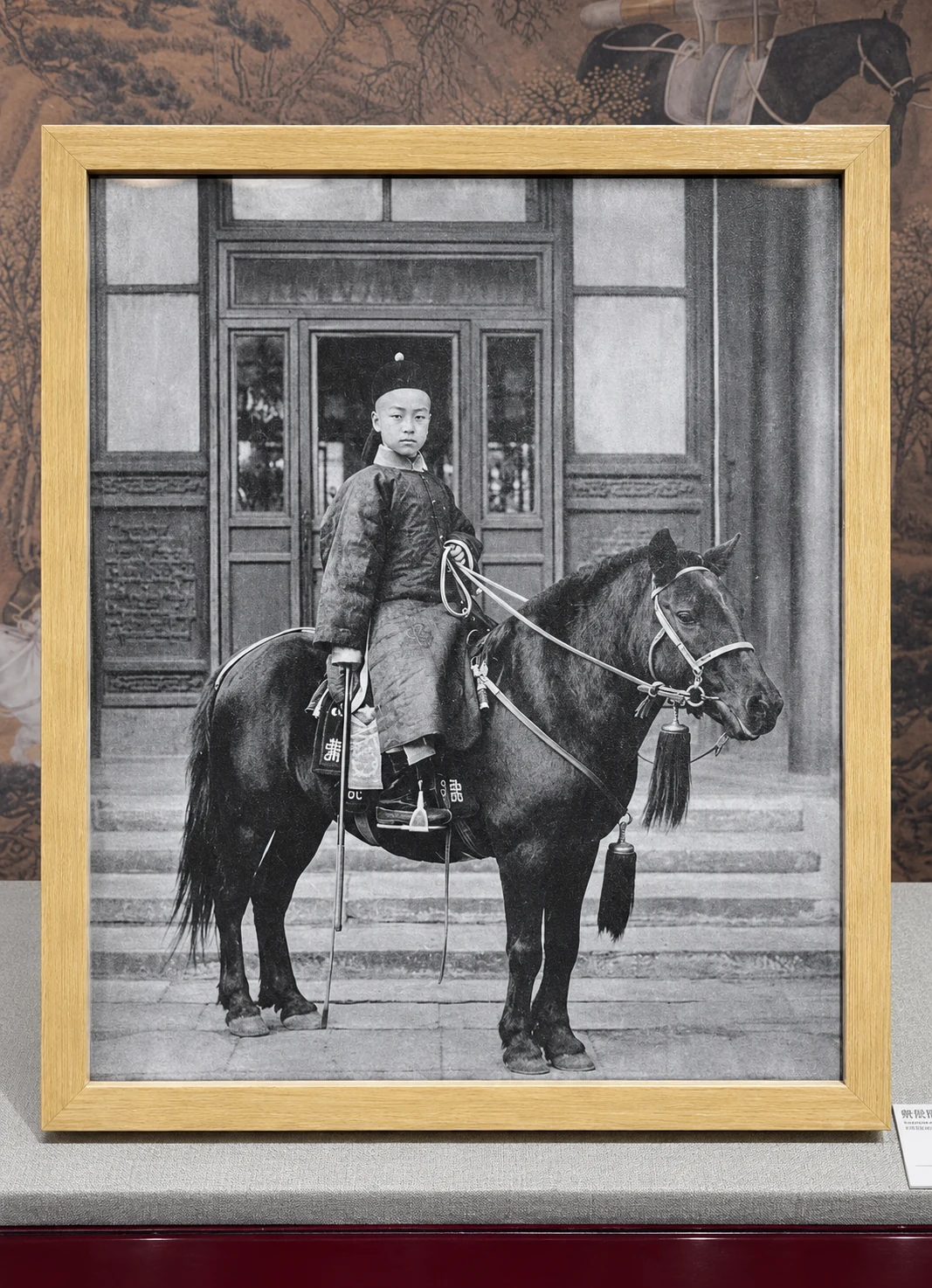
We took a look into a side hall and there was a horse exhibit. The horse exhibit was spread across three halls and really captured my wife’s attention. It was a China/French collaborative exhibit with signage in Chinese, English, and French. She found the portrait of a French boy on a horse and separately a Chinese boy on a horse particularly touching.
我们走进一座侧殿,里面有一个马主题展览。展览分布在三座殿里,妻子特别喜欢。那是中法合作展,展签有中文、英文和法文。她尤其喜欢两幅画:一幅画着法国男孩骑马,另一幅画着中国男孩骑马。
Then we were done with the halls and in the corridor that separates the residential compound from the gardens. I was faced with the “Western Gate” and it was at that moment I realized I indeed had been to this museum before. At least once.
逛完这些殿后,我们来到一条连接住宅区和花园的走廊。眼前的“西洋门”让我突然意识到,我以前确实来过这座博物馆。至少来过一次。
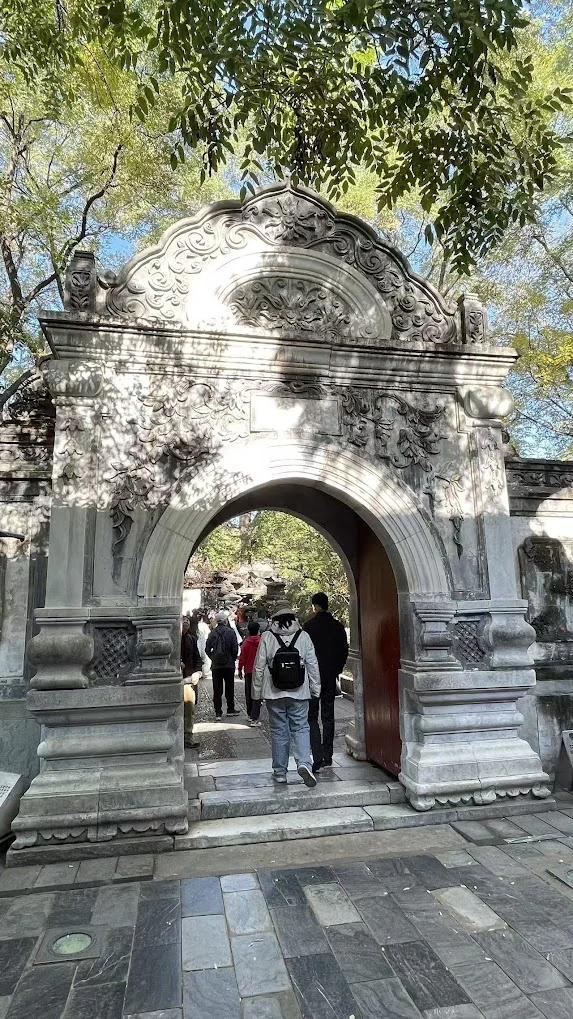
Western Gate
西洋门
The gardens returned memories I had long since forgotten to the point that 30 minutes prior I didn’t even remember that I forgot. Memories of trudging up the stone steps. Memories of the pavilion that sat like an island. Memories of that famous cave. The Miyun Cave has a line of its own which promptly stopped moving once we queued up. The cave is famous for a stone carving of the Chinese character 福, meaning good fortune.
花园勾起了我早已忘记的记忆,以至于半小时前我甚至不记得自己曾经忘记过。记得爬那些石阶,记得像小岛一样立在水中的亭子,也记得那座有名的洞。米云洞前也排起了队,我们刚排上,队伍就停住不动了。洞里最有名的是一块刻着汉字“福”的石刻,寓意好运。
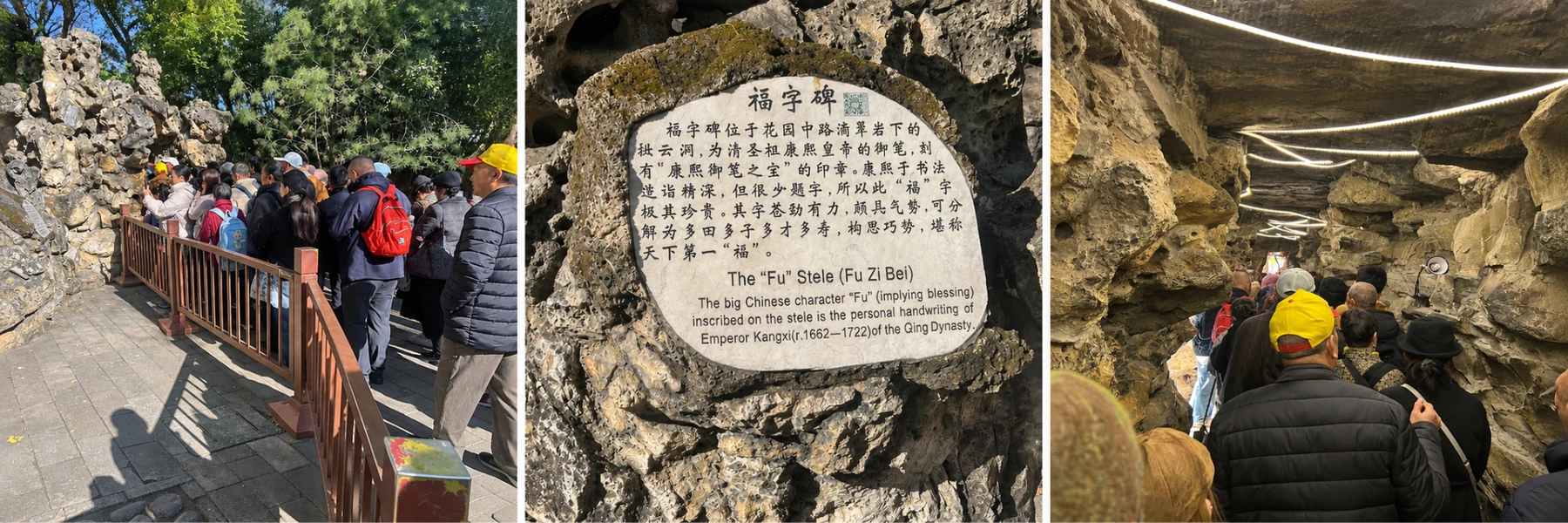
We made our way along the bat corridor and took a photo in front of the character wishing us longevity.
我们沿着蝙蝠廊往前走,还在一个寓意长寿的文字前拍了张照片。
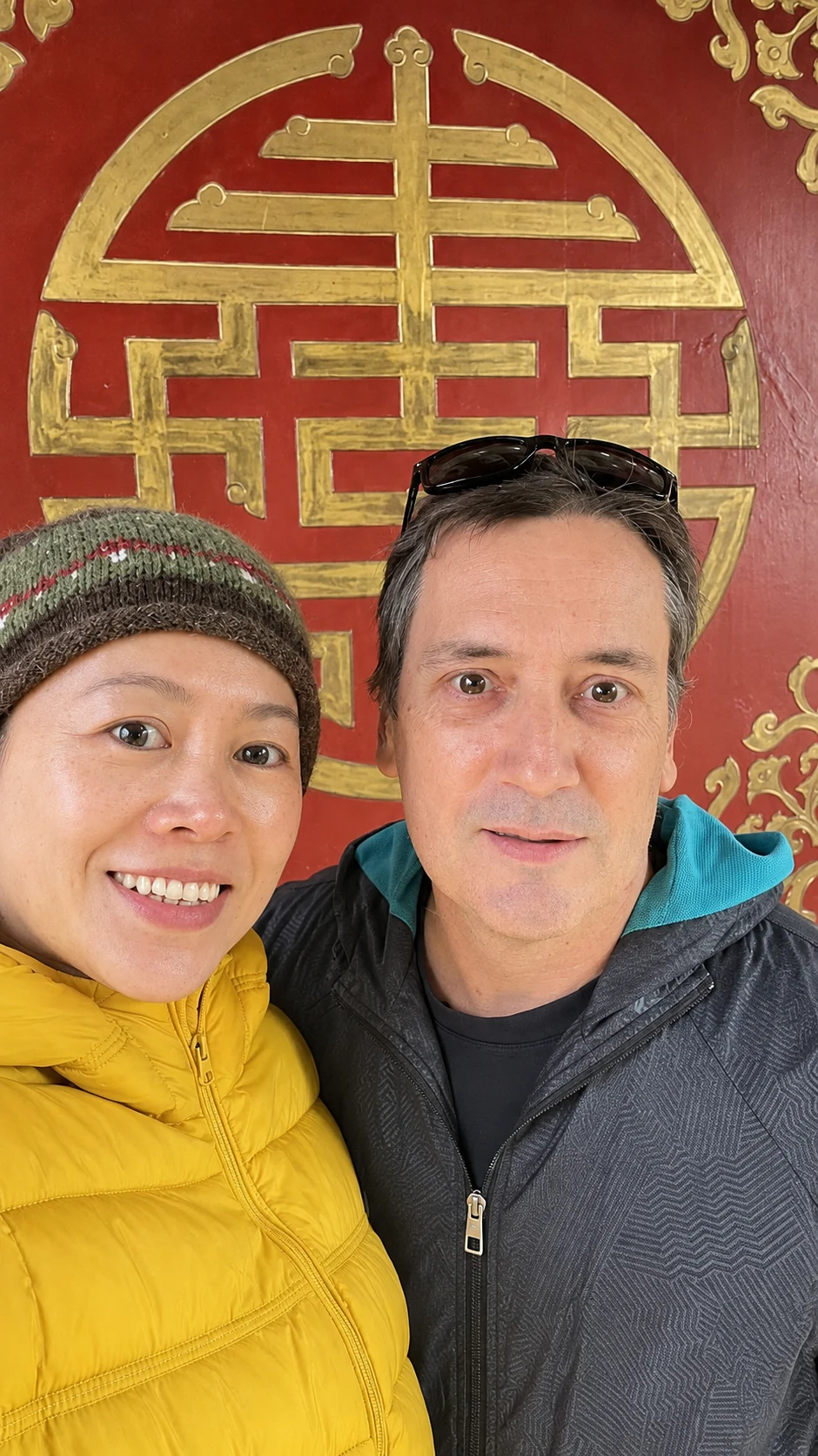
On our way out of the garden, we noticed another crowd peering in a doorway. That turned out to be the Grand Theater. Empty inside. Crowded outside. The lighting was somehow perfect.
离开花园时,我们看到另一群人围在一个门口往里看。那原来是大戏楼。里面空空荡荡,门外却挤满了人。不知怎么,光线刚刚好。
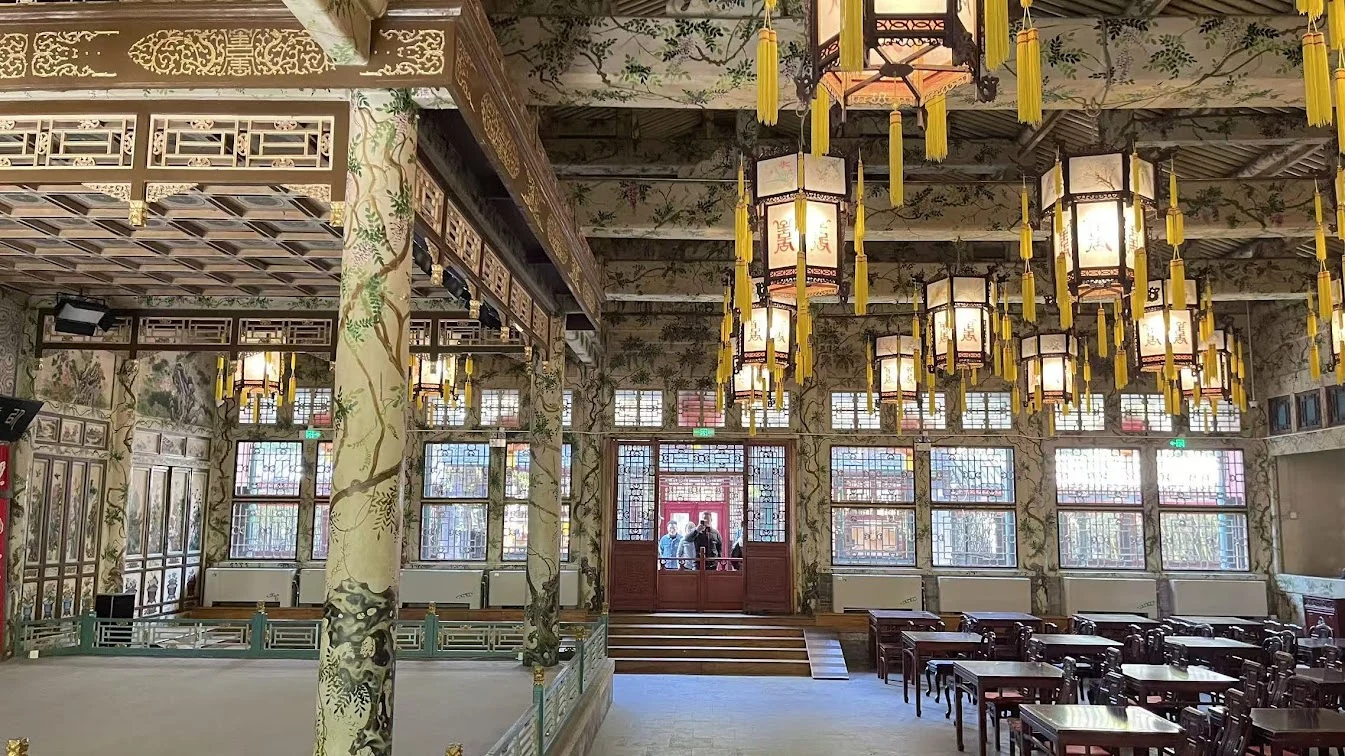
We explored another, less interesting, set of side hallways and then made our way down a corridor to the exit. The corridor had little shops along its right side and my wife reminded me we had bought some candy snacks for her niece from one of these shops the last time we came.
我们又看了几间没那么有意思的侧殿,随后沿着一条走廊前往出口。走廊右侧有一些小商店,妻子提醒我,上次来时我们曾在其中一家给她侄女买过糖果零食。
I wish I could say my lack of memories is because I live in the moment. Well, maybe I do, just not internationally.
我真希望能说,我记忆力不好是因为我活在当下。也许是吧,只不过不是在国外旅行时。
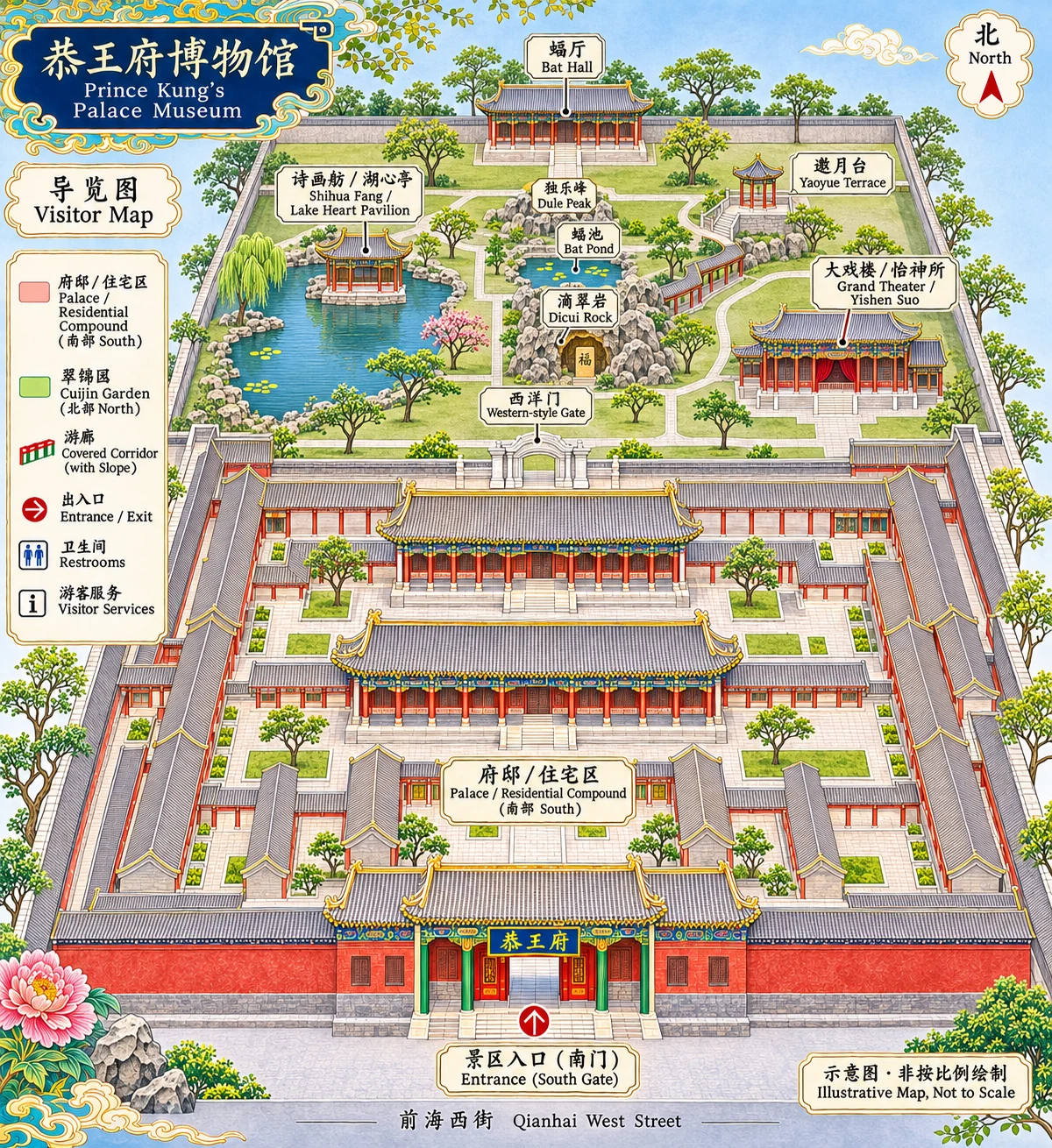
An AI generated, illustrative map to give you a sense of the layout. Specifics and scale may vary.
这是一张 AI 生成的示意地图,帮助你了解整体布局;具体位置和比例可能有所不同。
Continuing our post museum tradition, we had noodles. We picked a shop right across the street from the museum. It was somehow empty, which surprised me. One small tour group came in while we were eating and balked at the 29 RMB per bowl noodle price. I found the noodles good. Not as good as the shop Jensen visited, 69 Fangzhuanchang Noodles. And 69 Fangzhuanchang Noodles are not as good as the zhajiangmian my kid’s grandmother makes.
按照我们逛完博物馆就去吃饭的传统,我们去吃了面。我们选了一家就在博物馆对面的店。店里竟然空荡荡的,让我有些意外。我们吃饭时进来一个小旅行团,听到每碗面要29元就犹豫起来。我觉得面条味道不错,但比不上黄仁勋去过的方砖厂69号炸酱面;而方砖厂69号,也比不上我孩子奶奶做的炸酱面。