Capital Museum 首都博物馆
For Beijing history, this is a must visit museum with exceptional depth and exhibit quality.
如果想了解北京历史,首都博物馆非常值得一去,展览内容丰富,展陈质量也很出色。
 北京首都博物馆
More visit facts更多参观信息
- Opening hours · 开放时间
- 9:00 a.m.–5:00 p.m.; last admission at 4:00 p.m.; Closed: Tuesdays. Holiday and special-event arrangements may differ
每日9:00至17:00,16:00停止入馆;每周二闭馆。 - Visit length · 参观时长
- Allow for 2-4 hours or longer you want to spend time with each exhibit.
建议安排2至4小时;如果想在每件展品前细看,可能还需要更久。 - Admission · 门票
- General admission is free with valid ID. Separately ticketed special exhibitions may carry an additional charge
普通参观免费,入馆需出示有效身份证件;部分特展可能另行收费。 - Booking · 预约
- No advance reservation for general admission. Your identity document is required.
普通参观无需提前预约,入馆时需出示有效身份证件。 - English support · 英文支持
- Good for exhibit introductions and labels. Specific item descriptions are not always translated and English audio guides are clumsy to use.
展览导言和标签的英文支持较好,但部分单件展品没有英文说明;英文语音导览使用起来不太方便。 - Published · 发布日期
- 30 Oct 2026 · 2026年10月30日
北京首都博物馆
For the fifth museum in this series, I took on an anchor museum in Beijing, the Capital Museum. While the other museums we’ve visited have been awesome, Capital Museum takes it up a notch to a higher level in terms of depth, audiovisual displays, and overall exhibit quality. On the walk from Muxidi subway station I was looking for the museum when it visually announced itself. It wasn’t taller than the nearby buildings but it was certainly more impressive. The physical space it occupies, how it rises from the ground like a sculpture, and its modern architecture with nods to the past all make it unforgettable
这是本系列的第五家博物馆,我选择了一座北京的重要博物馆——首都博物馆。此前参观的几家博物馆都很棒,而首都博物馆又上了一个台阶:无论是内容的深度、视听展示,还是整体展陈质量,都更胜一筹。从木樨地地铁站步行过去时,我还在寻找博物馆,它却一下子映入眼帘,仿佛主动宣告了自己的存在。它并不比周边建筑高,却显得格外醒目。它占据的空间、仿佛从地面升起的雕塑般造型,以及融入传统意象的现代建筑,都令人难忘。
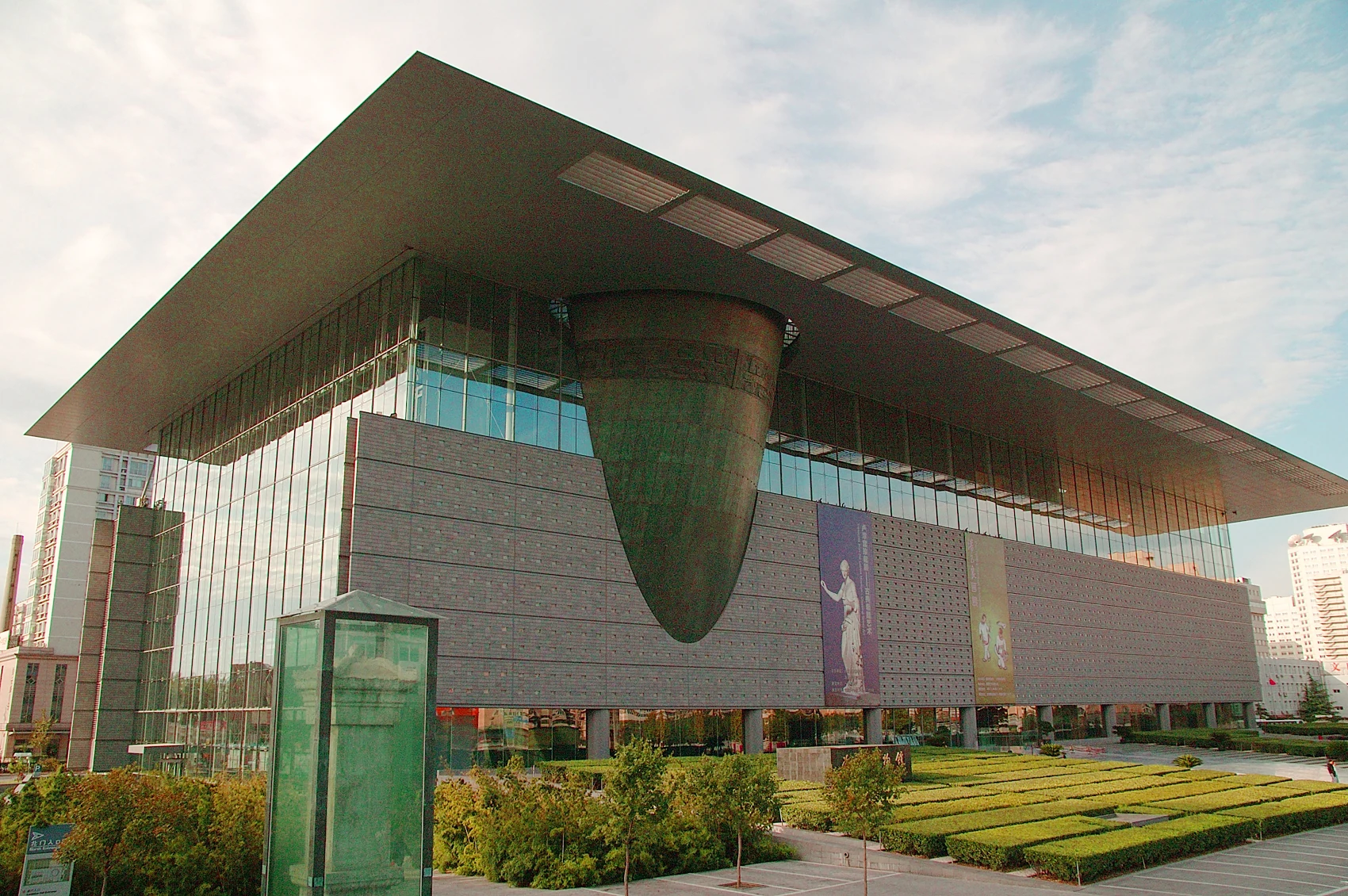
Photo Source: Beijing Municipal Government
Upon entering, my eyes were first drawn to a large ticket counter to the right side but it turns out that was for the paid exhibition only. Then I noticed a small checkpoint to the left where you show your ID to enter the museum for free. The woman who staffed the checkpoint was friendly and helpful. There was no line.
刚一进门,我首先注意到右侧一个很大的售票柜台,后来才发现那是收费特展的售票处。接着,我看到左侧有个小小的检查点,出示身份证件即可免费入馆。工作人员是一位女士,她既友善又热心。当时没有排队。
I was then presented with escalators that run up floor by floor to the fifth floor. The first choice is whether to start at the top and work your way down or start at the bottom and work your way up. Like life, I choose working the way up. I think it’s the right choice since the exhibits follow history chronologically from ancient times to modern times.
迎面是自动扶梯,一层层向上通到五楼。首先要决定的是从顶层往下逛,还是从底层往上走。就像人生一样,我选择了向上走,我觉得这是正确的选择,因为展览按照历史脉络,从古代一路讲到现代。
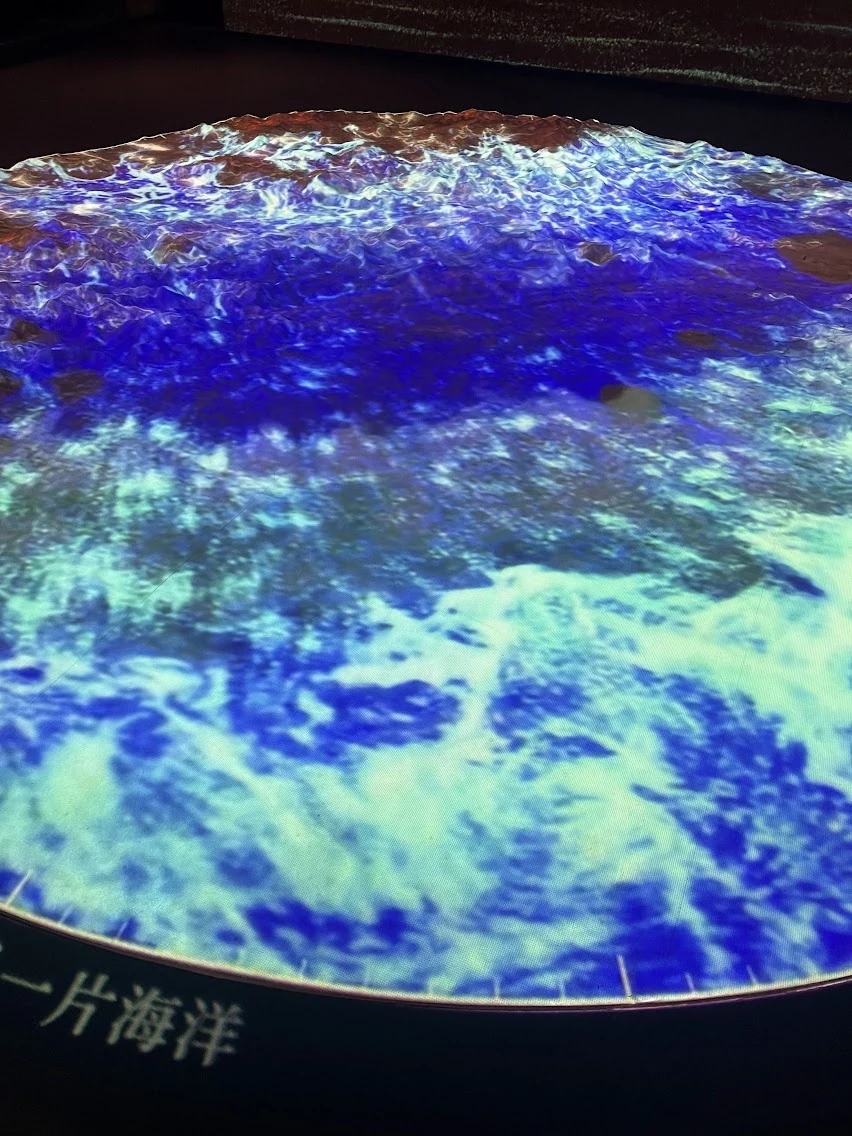
Walking into the exhibits on the 2nd floor, what first struck me was the quality of the Audio/Video displays. This one of the Beijing landscapes over time is one example of many
走进二楼展厅,最先吸引我的是视听展示的质量。比如这段呈现北京城市景观随时间变化的影像,只是许多例子中的一个。
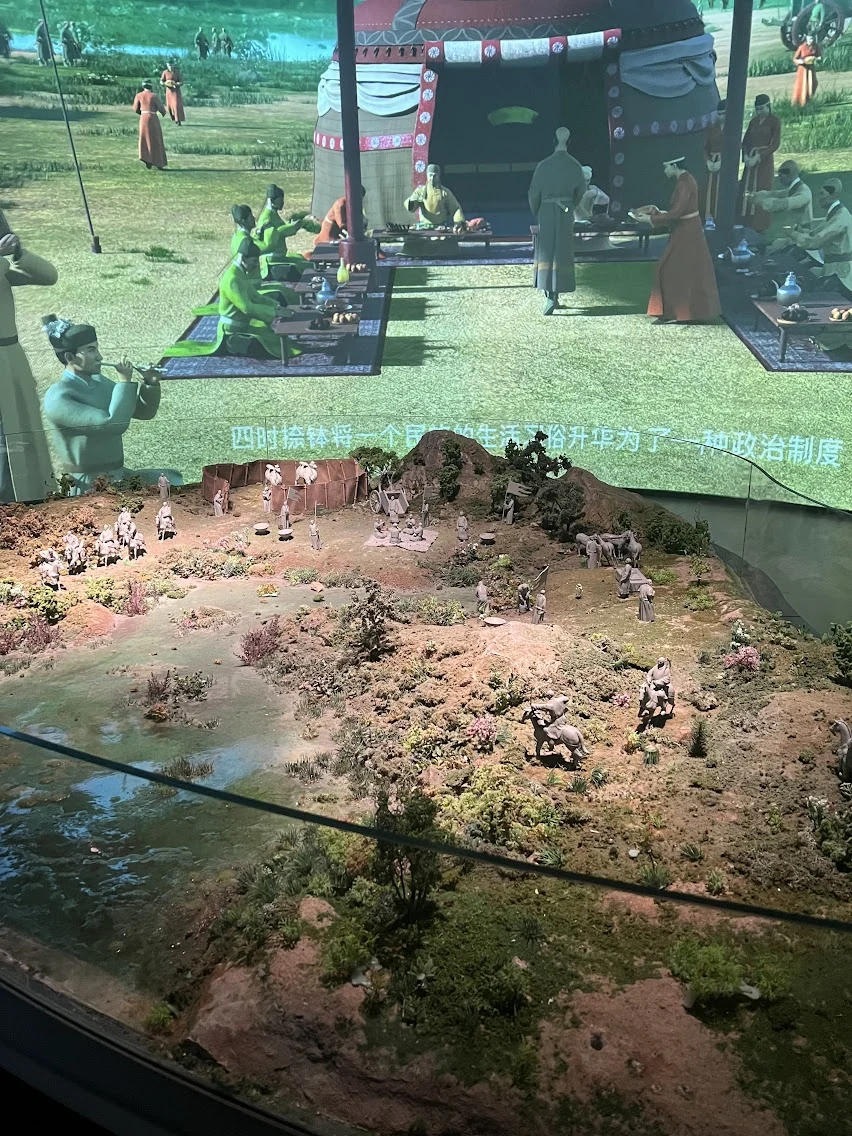
And this one of early life in Beijing that combined a physical display with video
还有这段讲述北京早期生活的展示,把实物展陈和视频结合在了一起。
The second thing that struck me was the large number of elementary school students just ahead of me in that part of the museum. Some were studiously visiting exhibitions, others were more playful. The third thing that struck me was this museum wasn’t messing around in terms of the history. It starts 700,000 years ago but what first caught my attention was 10,000 years ago during the Neolithic period. I did not know the people of Donghulin were some of the first to use farming to satisfy their daily needs. The number of exhibits and time covered was truly impressive and a bit overwhelming. I cannot overstate the quality of the exhibits.
第二个让我印象深刻的是前面那一片展区里有很多小学生。有些人认真地参观展览,也有人更活泼好动。第三个让我感受到的是,这座博物馆对历史的呈现毫不含糊。展览从距今70万年前讲起,但最先吸引我的是一万年前的新石器时代。我以前不知道东胡林人已经开始尝试以农耕满足日常所需,是北京地区较早出现农耕活动的人群之一。展品数量之多、时间跨度之长,既令人赞叹,也让我有些应接不暇。展览质量之高,怎么说都不为过。
I made my way around the floor. I decided to try out the audio guide, which has an English version. I had expected to be able to scan a QR code at an exhibit and listen to its description, but that did not work. Instead you had to search for the exhibit by name and then listen which made the experience too clumsy to be practical. I did find the English introductions for groups of exhibits to be clear and well written. The English titles for individual exhibits were sufficient but did not cover as much as the Chinese text.
我沿着这一层慢慢参观,决定试试语音导览。它有英文版本。我原以为可以在展品旁扫描二维码,听取相关介绍,但并没有成功。实际使用时,需要先按名称搜索展品,再播放讲解,操作起来太繁琐,不太实用。不过,我发现一组展品的英文导言写得清楚流畅。单件展品的英文标题基本够用,但英文说明没有中文那么充分。
The 3rd floor covered history from the Yuan dynasty to 1949 and there were a couple parts I found the most interesting. Years ago, a friend clued me in on the roof ridge ornaments and how intricate they can be. So when I saw this one, of a beast, it reminded me of my friend and I spent a few minutes studying it.
三楼讲述从元代到1949年的历史,其中有几处尤其吸引我。几年前,一位朋友告诉我屋脊上的装饰兽有多么精巧。所以当我看到这只兽时,便想起了那位朋友,还停下来仔细看了几分钟。
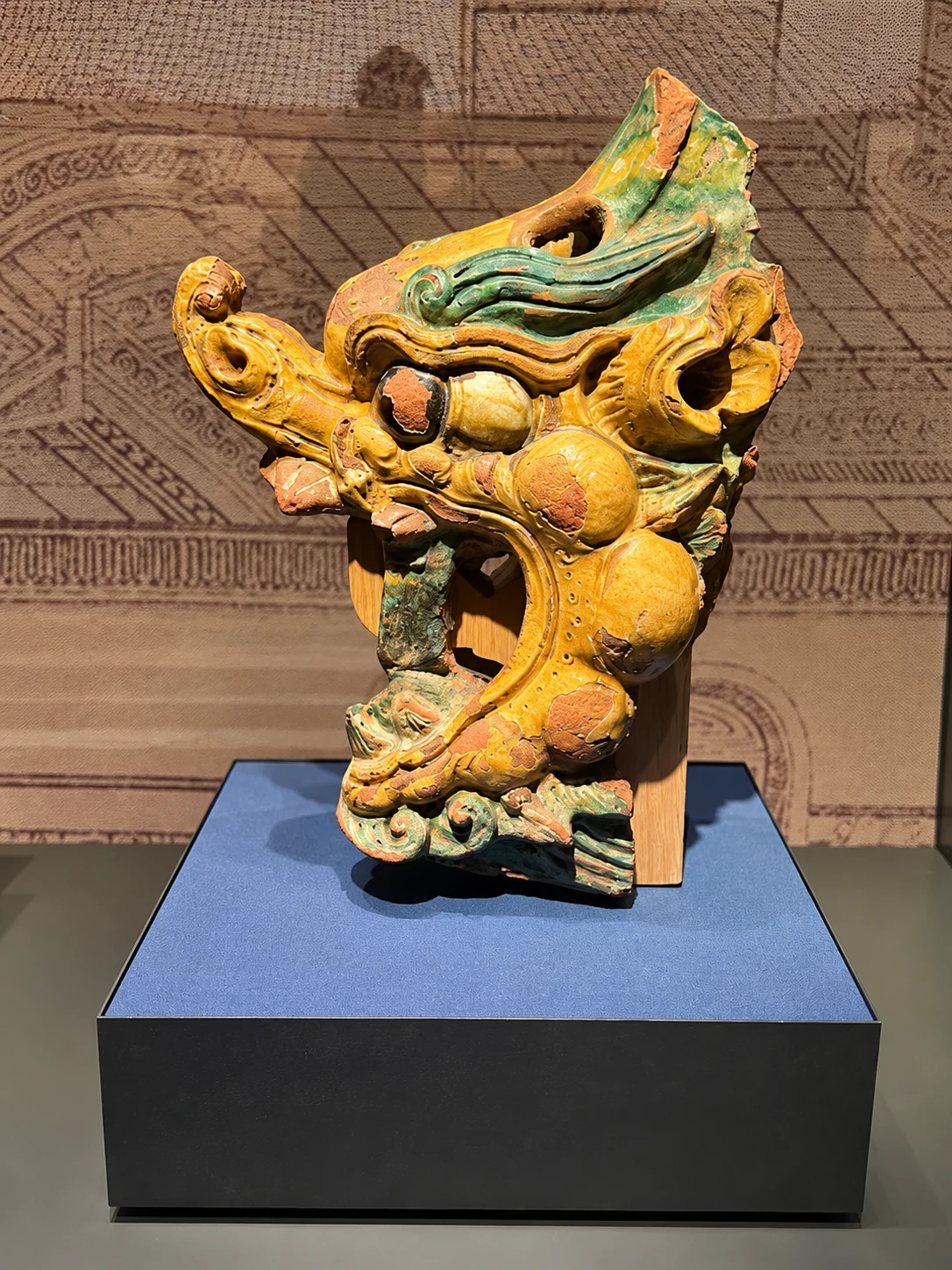
I was also naturally drawn to the exhibits covering the 1911 Revolution and Republic of China period through 1949. It felt like a more tangible history to me. I’ve heard it said that people’s time horizons are from our grandparents through our grandchildren. I am not sure if that’s the reason, but I have an intense curiosity about the history from 1911 until now
我自然也被关于1911年革命和民国时期(至1949年)的展览吸引。对我来说,这段历史似乎更加具体、触手可及。我听人说过,对非历史学家而言,我们感知历史的时间跨度大致从祖父母延伸到孙辈。我不确定这是不是原因,但我对1911年至今的历史一直特别好奇。
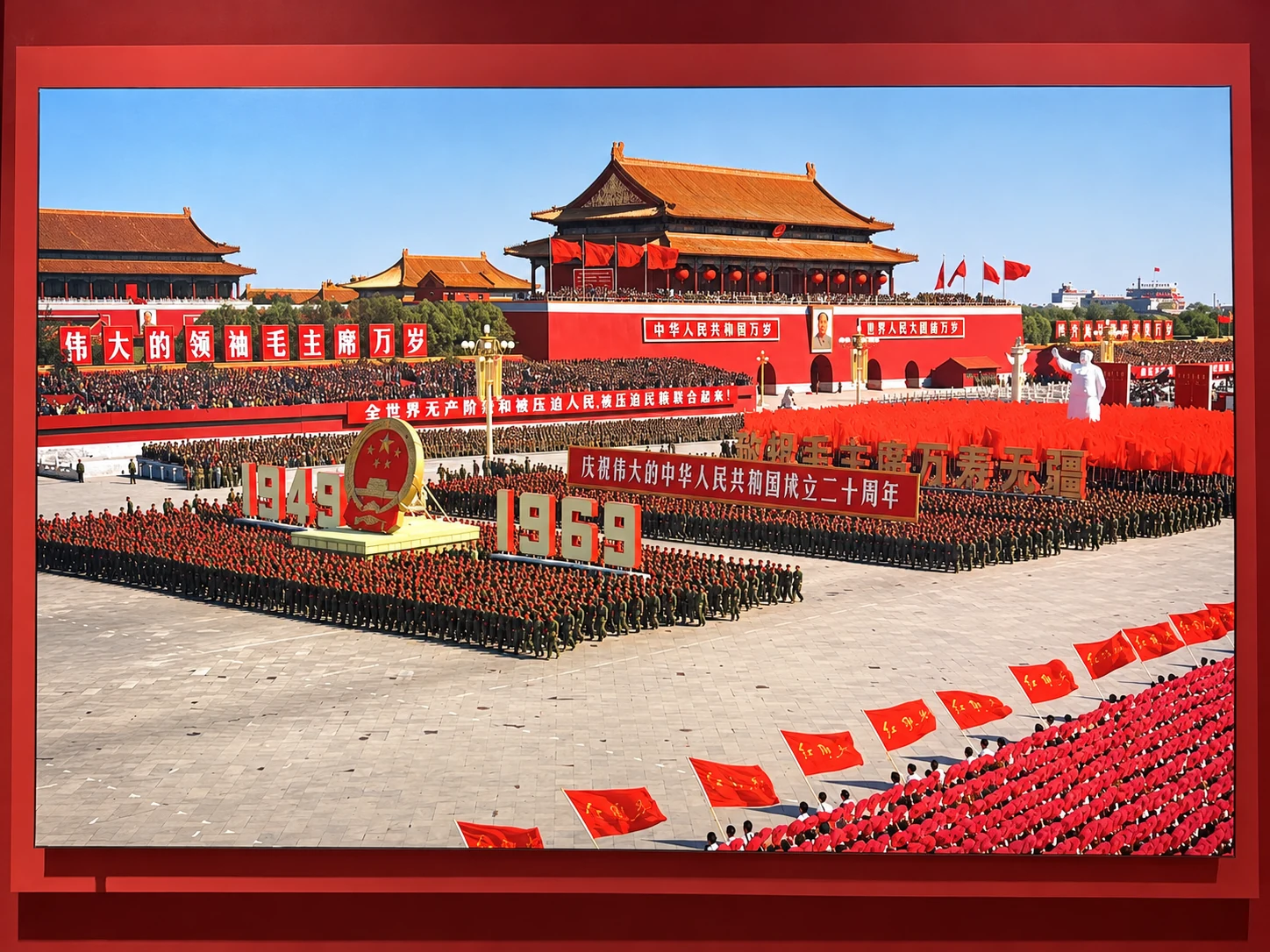
The 4th floor covered history from 1949 onwards and was visually a stark contrast from the previous two floors. Whereas the previous floors were dimly lit with a focus on the exhibits, the 4th floor was brightly lit. I ate up the history on this floor, starting with the video of the day the new China started on October 1, 1949 with Mao’s booming voice. I paused for a moment and spotted China’s national flag sitting atop a pole made from waterpipes which we first learned about at the Beijing Tap Water Museum. The rest of the floor covered the decades since founding and I studied the photos over the decades. The most impressive one to me was the photo of the parade marking the 20 year anniversary of the new China
四楼讲述1949年以后的历史,在视觉上与前两层形成鲜明对比。前几层光线较暗,重点突出展品;四楼则明亮许多。我尤其喜欢这一层的历史内容。参观从一段1949年10月1日的影像开始,毛泽东洪亮的声音响起。我停下脚步,看到一面中国国旗立在一根由水管制成的旗杆上。这正是我们在北京自来水博物馆了解到的故事。四楼其余部分展现了此后几十年的变化,我仔细看了不同时期的照片。最令我印象深刻的是一张中华人民共和国成立20周年群众游行的照片。
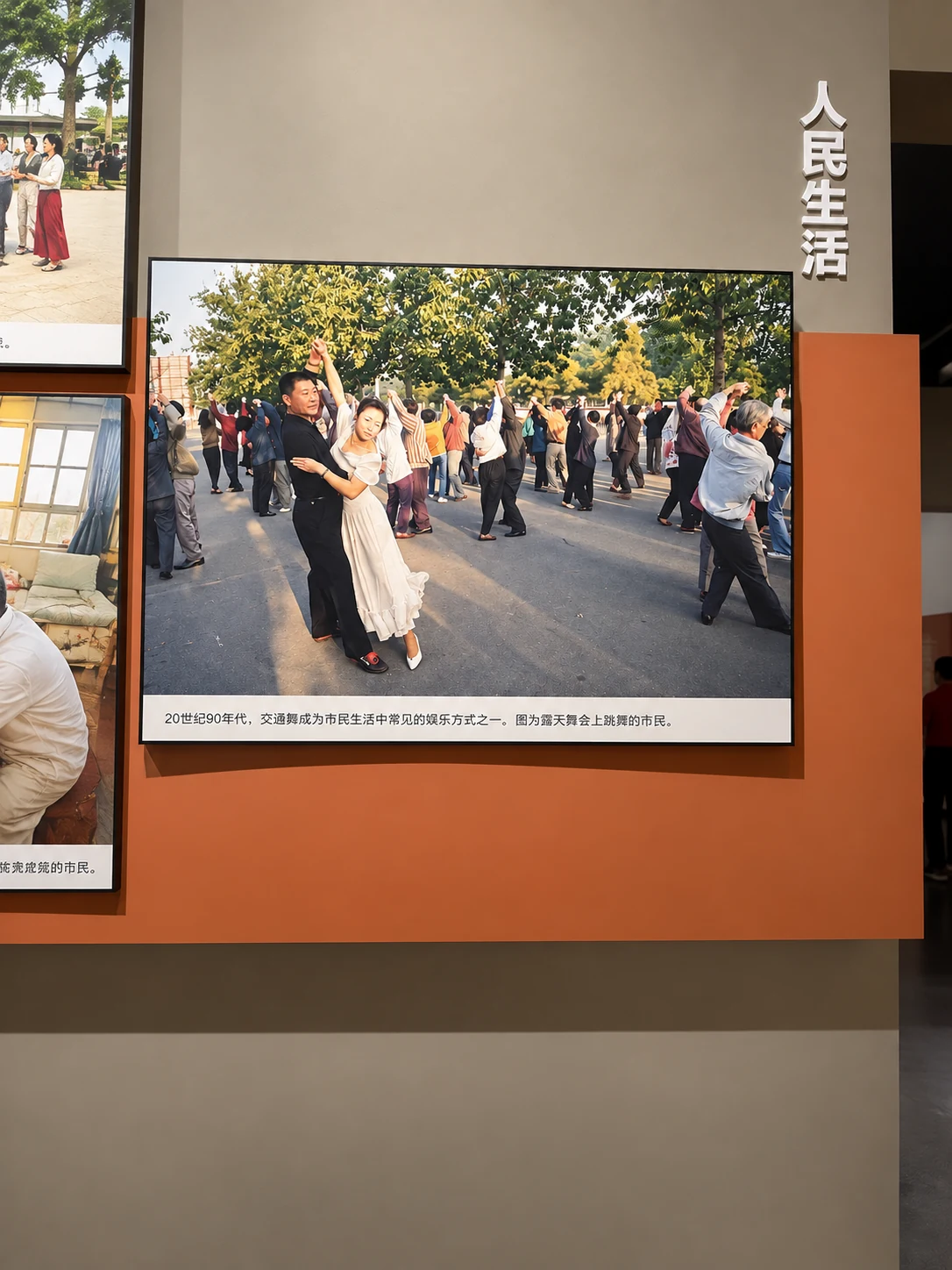
But the one that touched me the most was of Beijingers dancing in the park, a scene I still see during my daily walks
但最打动我的,是一张北京人在公园里跳舞的照片。这样的场景,我每天散步时仍会看到。
The 5th floor Beijing folk traditions exhibit was the least interesting to me. Don’t get me wrong, it was still good but it didn’t have the same gravitas as the other floors. Or maybe I was just worn out.
五楼的北京民俗展是我兴趣最少的一层。别误会,它依然不错,只是没有其他楼层那么厚重。也可能是我逛累了。
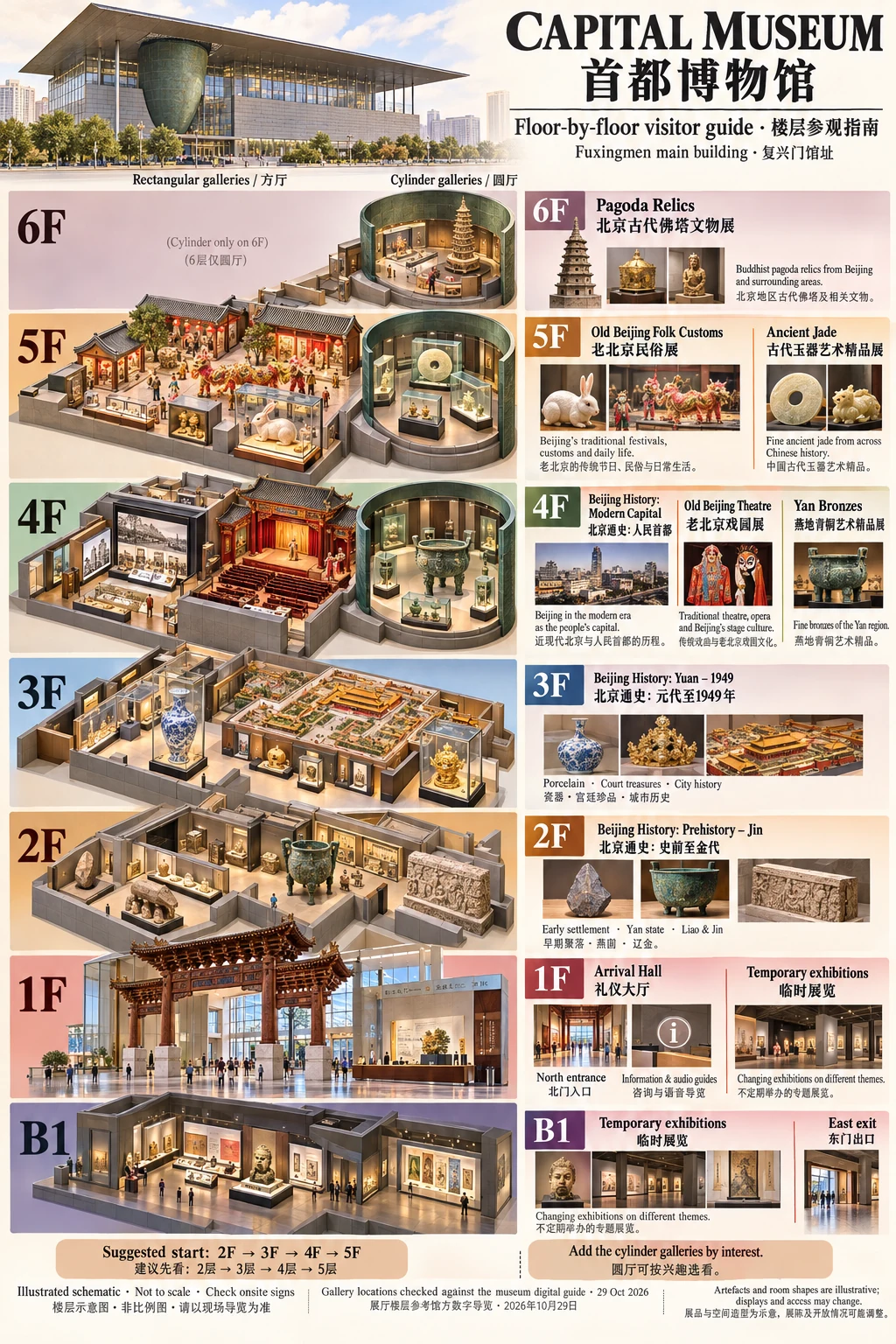
Here’s an AI produced illustration that from my visit looks correct.
下面是一张AI生成的楼层示意图。结合这次参观的感受来看,展厅所在楼层大致是准确的。
As I exited the building and reached the street, I looked back one more time to take in the building. As you might be able to tell from the language in this post, I did this visit solo as my wife is out of town. But she visited me, in a way, at the moment I turned and looked back. I thought about how when I was single I went on dates and the women were almost all fantastic but just not “the one”. Then I went on a date with my now wife and the feeling was different. Leveled up. This, in a strange way, is how I feel about the Capital Museum. The other museums were great, but this one is different. Leveled up.
走出大楼来到街上,我又回头看了一眼,想把这座建筑再好好看一遍。从文章的语气或许能看出来,这次是我一个人来,因为妻子出城了。但就在我转身回望的那一刻,她仿佛也以某种方式陪在我身边。我想起单身时约会的日子:遇到的女士几乎都很棒,只是都不是“那个人”。后来我和现在的妻子约会,感觉完全不一样,像是上了一个台阶。奇怪的是,我对首都博物馆也有类似的感觉。其他博物馆都很好,但这一家就是不一样。更上一层楼。
Additional Sources and Further Reading
- “Beijing General History Exhibition”
- Early millet use at Donghulin: “Early millet use in northern China,” by Yang et al., Proceedings of the National Academy of Sciences (2012). The authors present cultivation and domestication as an interpretation of the evidence.
- “The Birth of the Five Star Red Flag”
- Capital Museum digital visitor map
- Capital Museum new building project
- Capital Museum profile
- museum digital guide
- official Beijing General History exhibition page
- Beijing Municipal Government image
