Beijing Tap Water Museum 北京自来水博物馆
A small, free museum tracing Beijing’s water supply—and an unexpected flagpole story inside a vintage waterworks building.
这座免费的小型博物馆讲述北京供水史;一幢老式水厂建筑里,还藏着一段出人意料的旗杆故事。
More visit facts更多参观信息
- Opening hours · 开放时间
- Wed–Sun, 9:00 AM–4:00 PM; last entry 3:30 PM; closed Mon–Tue. Check holiday notices.
周三至周日 9:00–16:00,15:30 停止入馆;周一、周二闭馆。节假日开放安排请出行前核实。 - Visit length · 参观时长
- Recommended: about 2 hours; our visit: about 1 hour · 建议参观约2小时;我们当天参观约1小时
- Admission · 门票
- Free
免费 - Booking · 预约
- Individuals: no advance reservation; bring valid ID (a passport is accepted). Groups: call +86 10 6465 0787 to arrange a visit.
个人参观无需预约,携带有效身份证件登记入馆(可使用护照);团体参观请致电 +86 10 6465 0787 预约。 - English support · 英文支持
- Limited
有限 - Published · 发布日期
- 24 Sep 2026 · 2026年9月24日
Our visit · 我们的探访
Was it a hidden gem or just hidden? That was the question. I’ve wanted to visit the Beijing Tap Water Museum for years but for some reason never got around to it. Those damn hangnails. I mean, the name itself is fascinating; who would think there would be a museum about tap water?
那它究竟是隐藏的宝藏,还是单纯藏得太深?这就是我一直在想的问题。多年来,我一直想去北京自来水博物馆,却不知为何始终没能成行。都怪那些该死的倒刺。说真的,光是这个名字就很有意思:谁会想到竟然会有一座自来水博物馆呢?
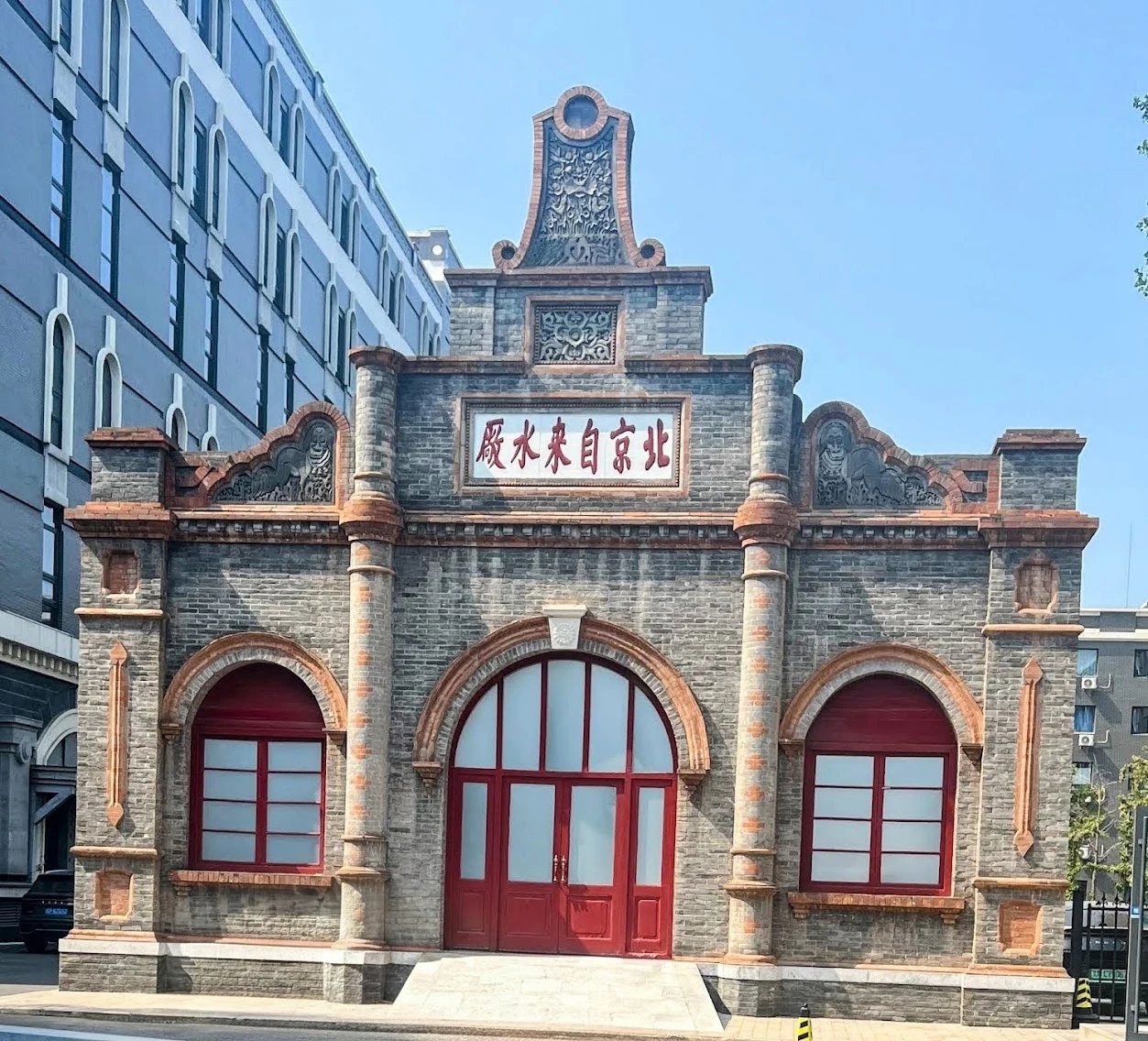
Yet there is. The museum isn’t perfect by any means, but it is a gem. On the walk there from the subway - whether you get off at Dongzhimen or Zuojiazhuang station - you pass by modern office buildings and residences. Somehow, in this modern landscape and on the site of the original Dongzhimen water works plant, sits a vintage building which is home to the museum.
但它确实存在。博物馆并非十全十美,但的确是个宝藏。从地铁站步行前往时——无论你在东直门站还是左家庄站下车——沿途都会经过现代化的办公楼和住宅。在这片现代街景之间,坐落着一座建在东直门水厂旧址上的老式建筑,博物馆就在其中。
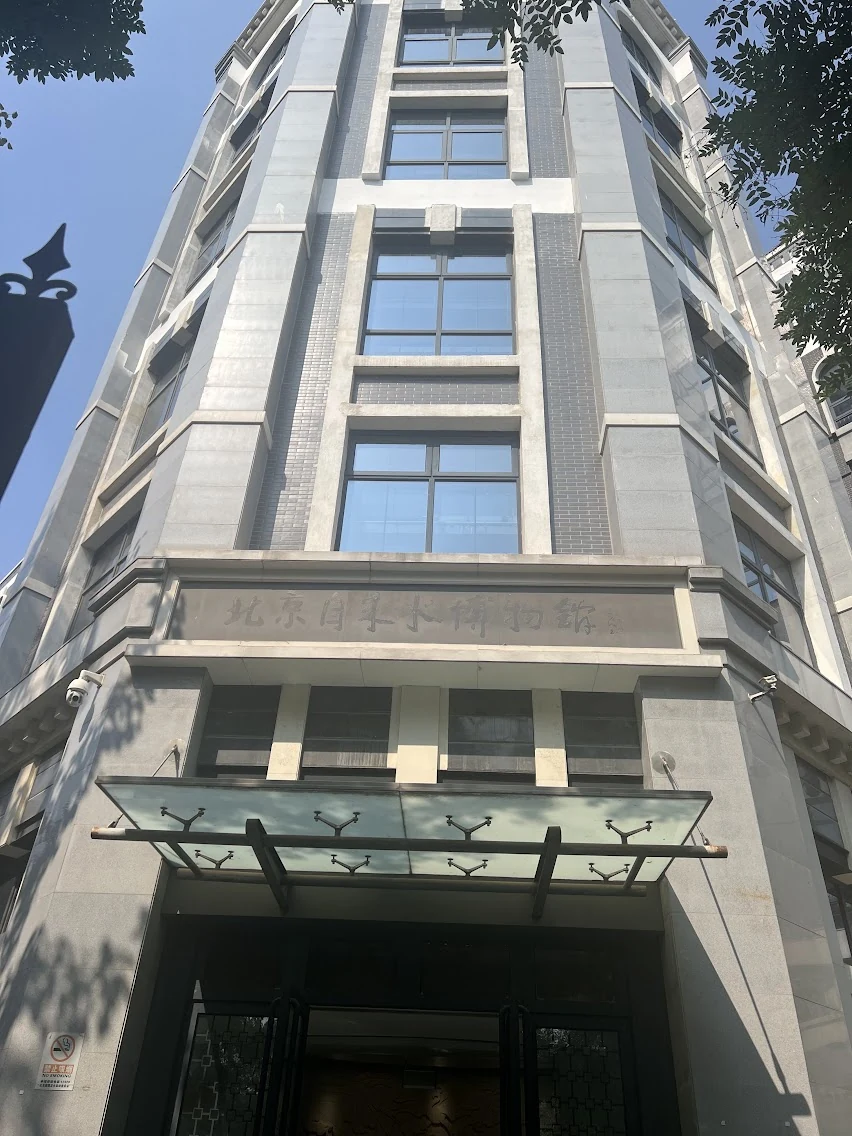
A lone security guard greets us. Well, not so much as greets us as paces back and forth at the entrance and asks us to register (name, phone number, ID number) on a paper form. Entry is free beyond privacy. The entryway itself is clean and looks recently renovated. There is a bilingual sign introducing the museum. Sadly for me, it was one of the few English signs in the museum.
一位保安独自迎接我们。与其说他在迎接,不如说他是在入口处来回踱步,并要求我们在一张纸上登记姓名、电话号码和身份证号。入场免费,不过得拿一点隐私来交换。入口处很干净,看起来刚翻新过。那里有一块介绍博物馆的双语标牌。可惜对我来说,它也是馆内为数不多的英文标识之一。
The first floor is like being on an elementary or middle school field trip with explanations of water, its flows, and how it’s sanitized. There is an interactive exhibit, virtual avatar included that would either fascinate or bore a third grader. A highlight was a map showing how the water in China flows from south to north and my wife Sabrina found her hometown on the map.
一楼就像参加小学或初中的校外教学活动,展览讲解了水的相关知识、水的流动,以及水是如何经过净化的。还有一处互动展览,甚至配有虚拟人物——三年级小学生可能会看得入迷,也可能觉得无聊。一个亮点是展示中国水资源如何从南方向北方调配的地图,我妻子 Sabrina 还在地图上找到了她的家乡。
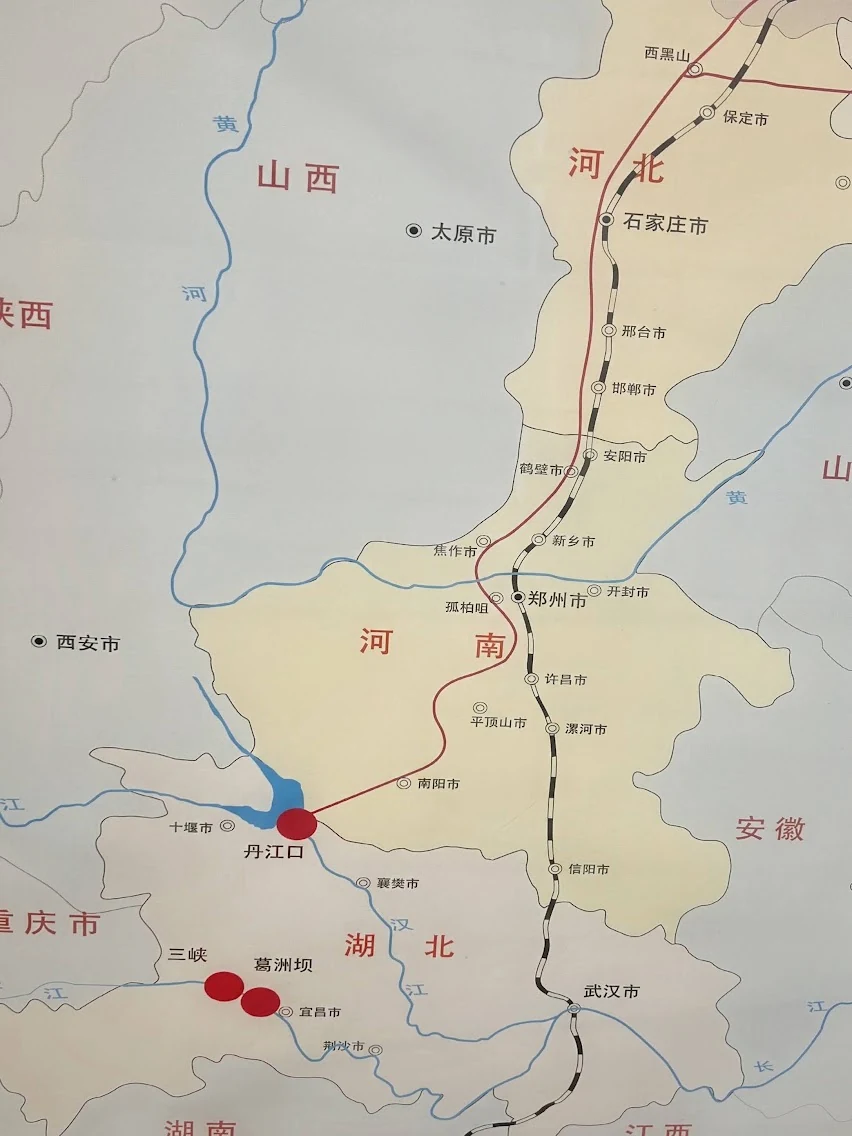
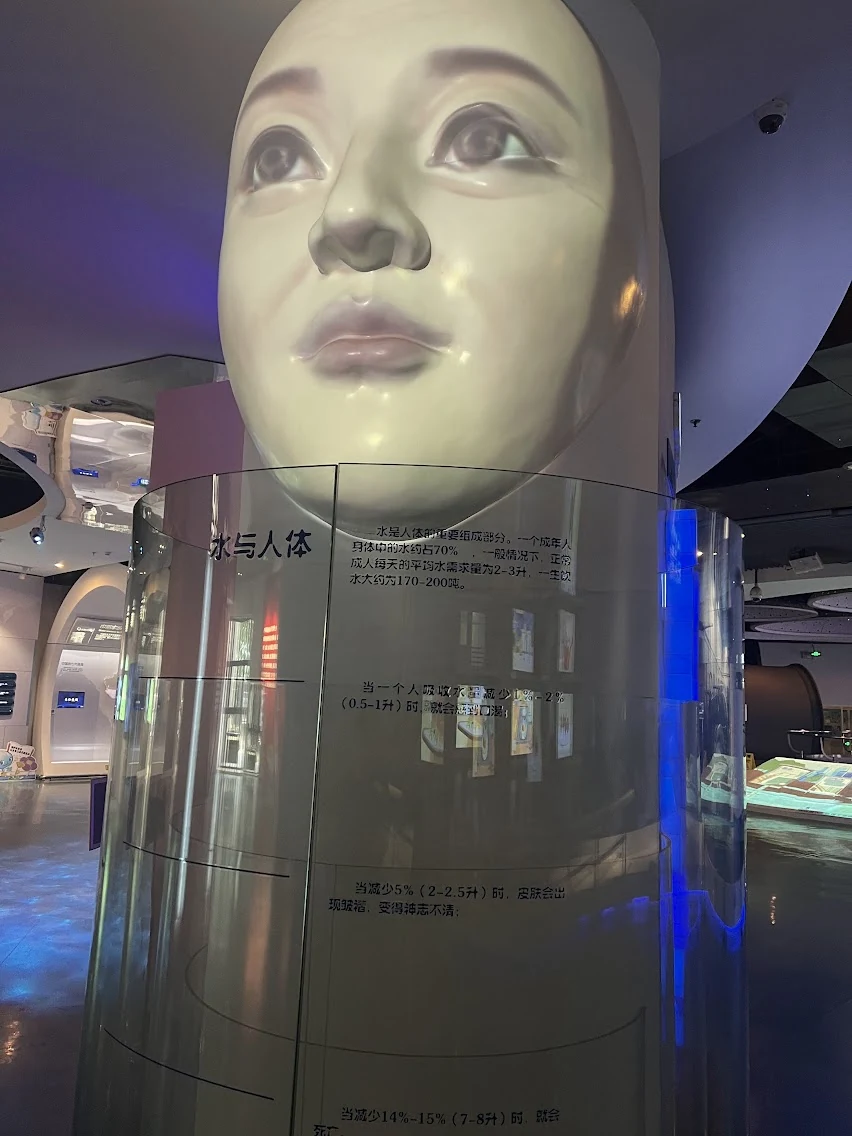
Don’t be put off by the plainness of this map, the first floor includes multiple visually engaging exhibits. One such exhibit is how water is used in the human body.
别因为这幅地图看起来朴素就扫兴;一楼还有不少视觉效果很出彩的展览。其中一个展览介绍了水在人体中的作用。
They say men become fascinated with history when they turn 40. Well, I’m well past 40 and nothing grabs my attention more than history told well (not exactly true). Which brings us to the second floor of the exhibition. It is the history of Beijing water from 1908 onwards. My attention was grabbed. Two exhibitions stood out to me. The first was a physical map of Beijing that highlighted the changes throughout the years along with a short video explanation.
人们常说,男人到了40岁就会开始对历史着迷。我早就过了40岁,而最能吸引我的,莫过于讲得精彩的历史(其实也不完全是这样)。说到这里,就该上二楼展区了。这里讲述的是1908年以来北京供水的发展史。这下可吸引到我了。有两处展览尤其让我印象深刻。第一处是一幅北京实体地图,展现了这些年来城市的变化,旁边还有一段简短的视频讲解。
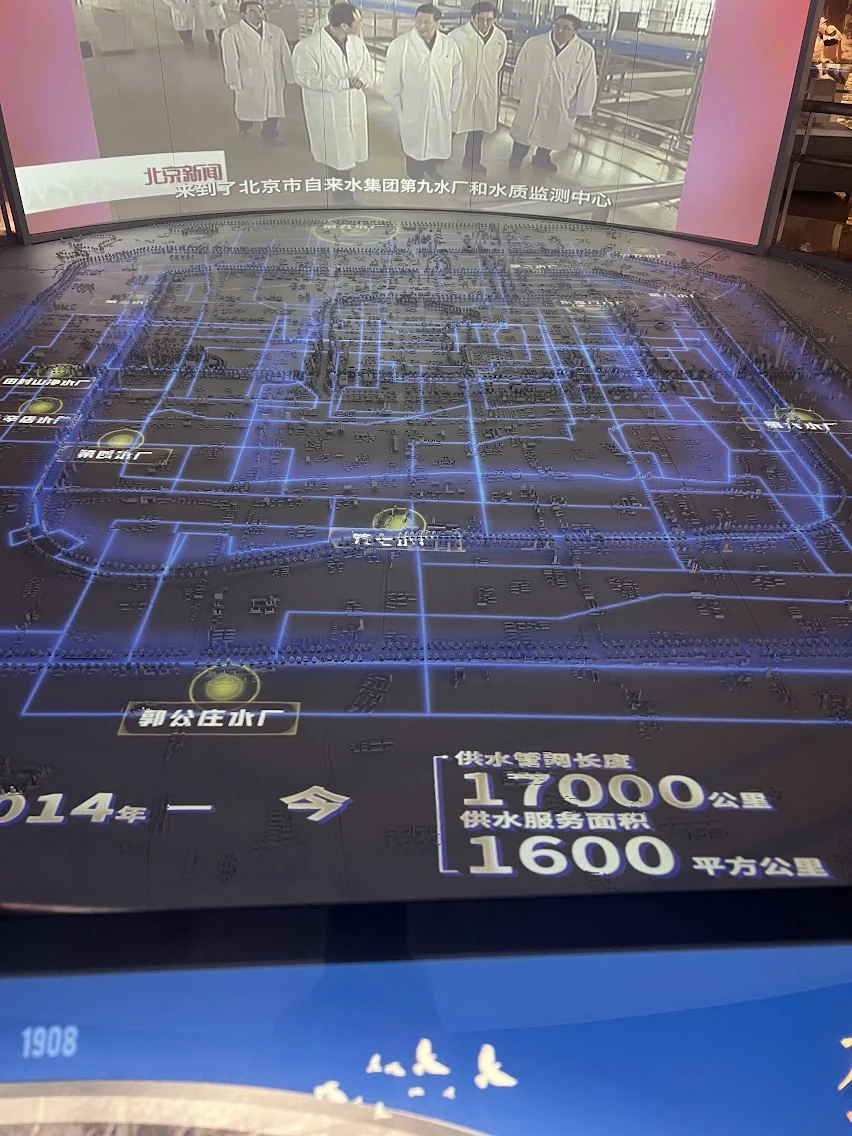
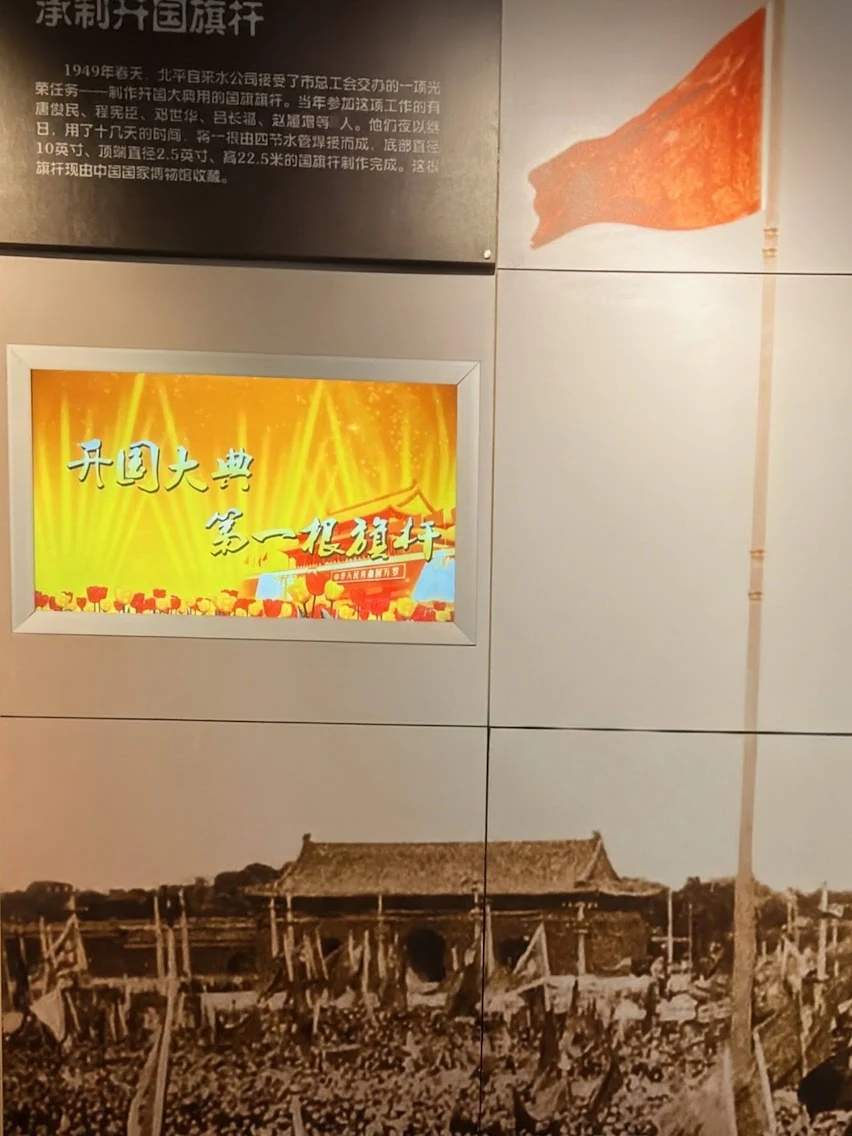
The other second floor highlight was an exhibition about a flagpole. When it came time to raise the new China flag, on October 1st, 1949, four steel water pipes supplied by the Beijing water company were strung together to make it happen. I loved the tidbit and the ingenuity.
二楼另一个让我印象深刻的展览,讲的是一根旗杆。1949年10月1日升起新中国国旗时,北京自来水公司提供的四根钢制水管被接在一起,临时搭成了旗杆。我很喜欢这个小故事,也佩服其中的巧思。
We spent about an hour in the museum and saw maybe 10 other visitors. As we headed out, we noticed the historic entrance and I was unsure - like many things in Beijing - if it was original or a reconstruction.
我们在博物馆里待了大约一个小时,只看到大概十位其他参观者。离开时,我们注意到了那座颇有历史感的入口。我也和许多北京事物一样,不太确定它究竟是原物,还是后来重建的。
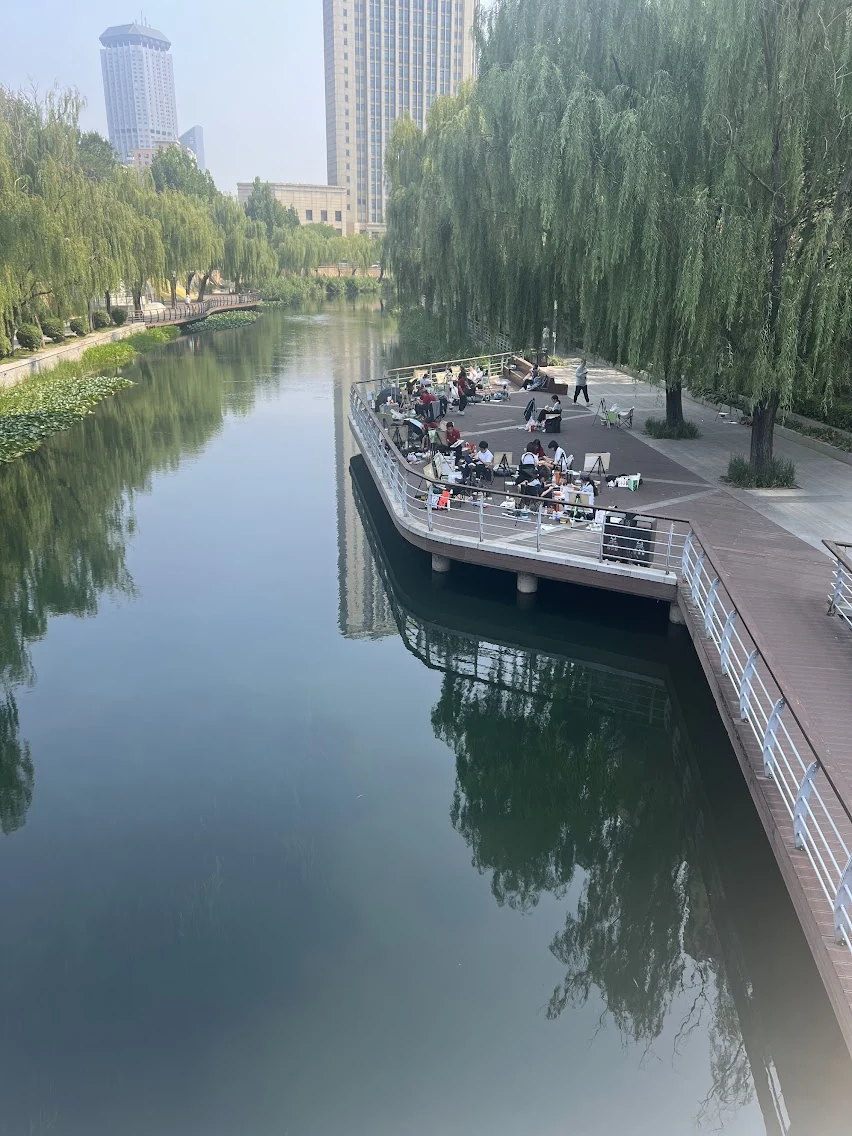
The day being pleasant and warm, we strolled along a nearby river and observed art students pausing for lunch.
天气温暖宜人,我们沿着附近的河边散步,看到艺术生们停下来吃午饭。
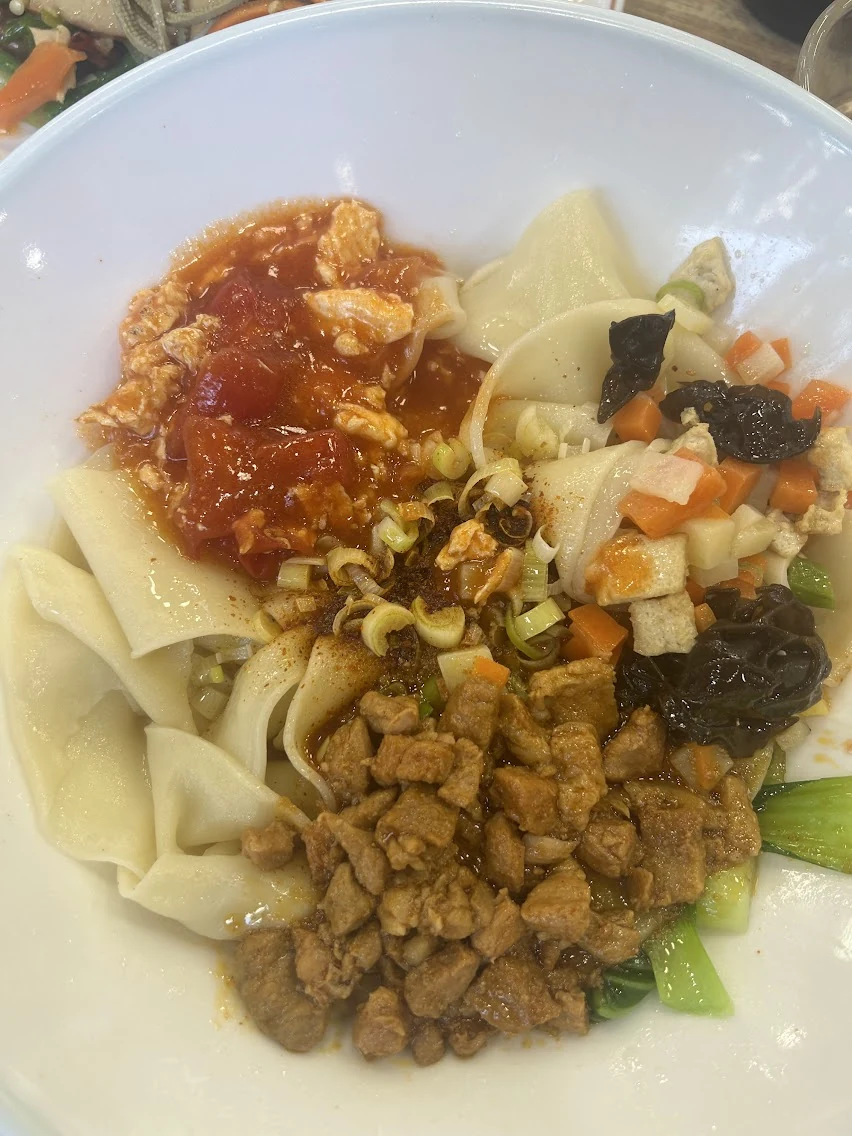
Then we stopped for our own lunch, me not being able to resist some Shanxi noodles.
然后我们也去吃午饭了——我实在抵挡不住山西面食的诱惑。
Additional Sources and Further Reading
- Beijing Municipal Bureau of Culture and Tourism / Visit Beijing — Beijing Tap Water Museum (北京自来水博物馆)
- Visit Beijing — Beijing Tap Water Museum English/International Visitor Information
- Beijing Water Authority (北京市水务局) — Beijing Tap Water Museum and the History of Beijing’s Water Supply
- People’s Daily / CPC History — Story of the National Flagpole for the October 1, 1949 Founding Ceremony
- Beijing Municipal Government — Beijing Tap Water Museum / City of Museums
- Wikipedia — Beijing Tap Water Museum (北京自来水博物馆)